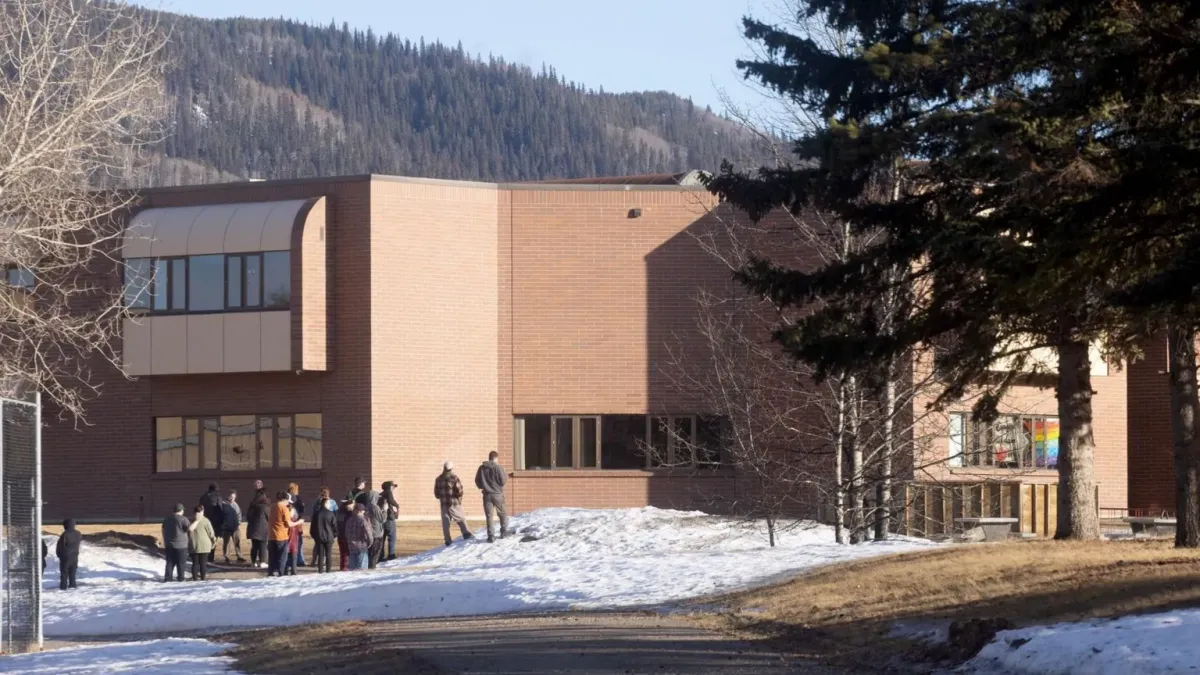
TUMBLER RIDGE — A gunman killed at least nine people and wounded dozens more on Tuesday afternoon in a remote northeastern British Columbia community, attacking a secondary school and a nearby residence before being found dead at the school, police said. Local and provincial authorities described the incident as one of the deadliest mass shootings in recent Canadian history; investigators said they had identified the person believed to be responsible but provided limited details about motive and identity. Hospitals in the region received multiple patients with serious injuries; emergency responders and provincial officials said there was no ongoing threat to the public.
What happened and immediate official response
Local law enforcement received the first reports of an active shooter at the secondary school shortly after midday local time. Officers who entered the school discovered multiple victims; additional casualties were located at a residence in the same township. Emergency medical services and air ambulances transported several critically injured people to regional hospitals; some patients were moved to larger centres for specialized care.
Provincial police and school district officials established a command post and moved to secure the area, evacuating students and staff and setting up family reunification points. Authorities said they did not believe there were additional suspects and urged the public to avoid the area while investigators processed the scenes. Provincial leaders and federal officials issued brief statements expressing condolences and promising resources for the community.
Authorities reported at least nine fatalities connected to the two scenes and said dozens of people were injured; hospitals described receiving multiple patients with life‑threatening wounds. Medical officials characterized the casualty figures as preliminary and subject to change as investigators and health services continued to account for victims and treat the wounded. At least two patients were reported to have been airlifted to tertiary care centres for trauma surgery and critical care.
Officials cautioned that counts released in the immediate aftermath of mass‑casualty events can shift as authorities reconcile scene reports, hospital admissions, and family notifications. For that reason, the numbers cited here reflect official tallies and statements available as of 11 February 2026; any later revisions by police or health authorities are not reflected in this report.
The suspect, identity and status of the investigation
Police said they had identified the person believed to have carried out the attacks and that the individual was found dead at the school from what appeared to be a self‑inflicted injury. Investigators did not immediately release the suspect’s name, age, or motive, and they declined to confirm whether the person was a student or otherwise connected to the school community. Officials said there was no indication of additional suspects and that investigators were working to establish a timeline and the relationship, if any, between the school and the residence where two bodies were found.
Forensic teams and homicide investigators were on site to collect evidence, interview witnesses, and reconstruct the sequence of events. Police said they would release more information when it would not jeopardize the investigation or the privacy of victims and their families. Prosecutors and coroners were expected to be involved in the next stages of the inquiry, including autopsies and formal identification of the deceased.
Tumbler Ridge is a small, remote town with a tightly knit population; the scale of the violence has prompted an immediate and visible community response. Local officials activated crisis supports and mental‑health resources for students, families, first responders, and school staff. Nearby municipalities and provincial agencies offered assistance with shelter, counseling, and logistical support for displaced residents and relatives seeking information.
School District officials moved to close schools in the immediate area and to provide trauma counseling and academic accommodations for students affected by the incident. Community leaders emphasized the need for long‑term support, noting that recovery from a mass‑casualty event in a small town requires sustained resources for mental health, social services, and economic stabilization.
Policy context and firearms regulation in Canada
Mass shootings are rare in Canada compared with the United States, a fact often attributed to Canada’s stricter firearms regulations and licensing regime. The country requires background checks, safety training, and licensing for most firearm owners, and it maintains classifications for restricted and prohibited weapons. School shootings of this scale are almost unheard of in Canada, and the incident has already prompted renewed public debate about firearm access, school safety measures, and mental‑health services.
Policy analysts and public‑safety experts said the event will likely trigger reviews of local and provincial emergency protocols, school security practices, and the implementation of existing firearms laws. Any legislative or regulatory response would involve provincial and federal authorities and could include calls for tighter controls, improved information sharing between health and law‑enforcement agencies, or investments in school safety infrastructure.
While the shooting is a domestic criminal incident, it has broader implications for public policy and political discourse in Canada. High‑profile mass‑casualty events can shift public attention and political capital toward security and public‑safety measures, potentially influencing upcoming legislative agendas at the provincial and federal levels. The incident may also affect cross‑jurisdictional cooperation on emergency response and trauma care in remote regions, highlighting gaps in rapid access to specialized medical services.
International observers and comparative policy researchers will likely examine the event in the context of Canada’s gun laws and social‑service systems, assessing whether policy adjustments are needed to prevent similar tragedies. The immediate focus for officials, however, remains on victim care, family notifications, and a thorough criminal investigation.
Next steps for investigators and public information
Investigators said they will continue to process the two scenes, interview witnesses, and review digital and physical evidence to build a timeline and determine motive. Coroners will conduct autopsies and formal identifications; police said they would release names only after next‑of‑kin notifications. Authorities also indicated they would provide periodic public briefings as legally permissible and as investigative needs allow.
Officials urged anyone with information to come forward to assist the investigation and asked the public to rely on official channels for updates to avoid the spread of unverified information. Community leaders and health officials emphasized the need for accurate, timely information to support families and to prevent rumors that could further traumatize survivors.
Written by Nick Ravenshade for NENC Media Group, original article and analysis.
Sources: Associated Press, New York Times, CBC, Global News, Al Jazeera.
Photo: Archival photo of Tumbler Ridge Secondary School; Trent Ernst/Tumbler RidgeLines; used for news reporting (editorial use)


Comments ()