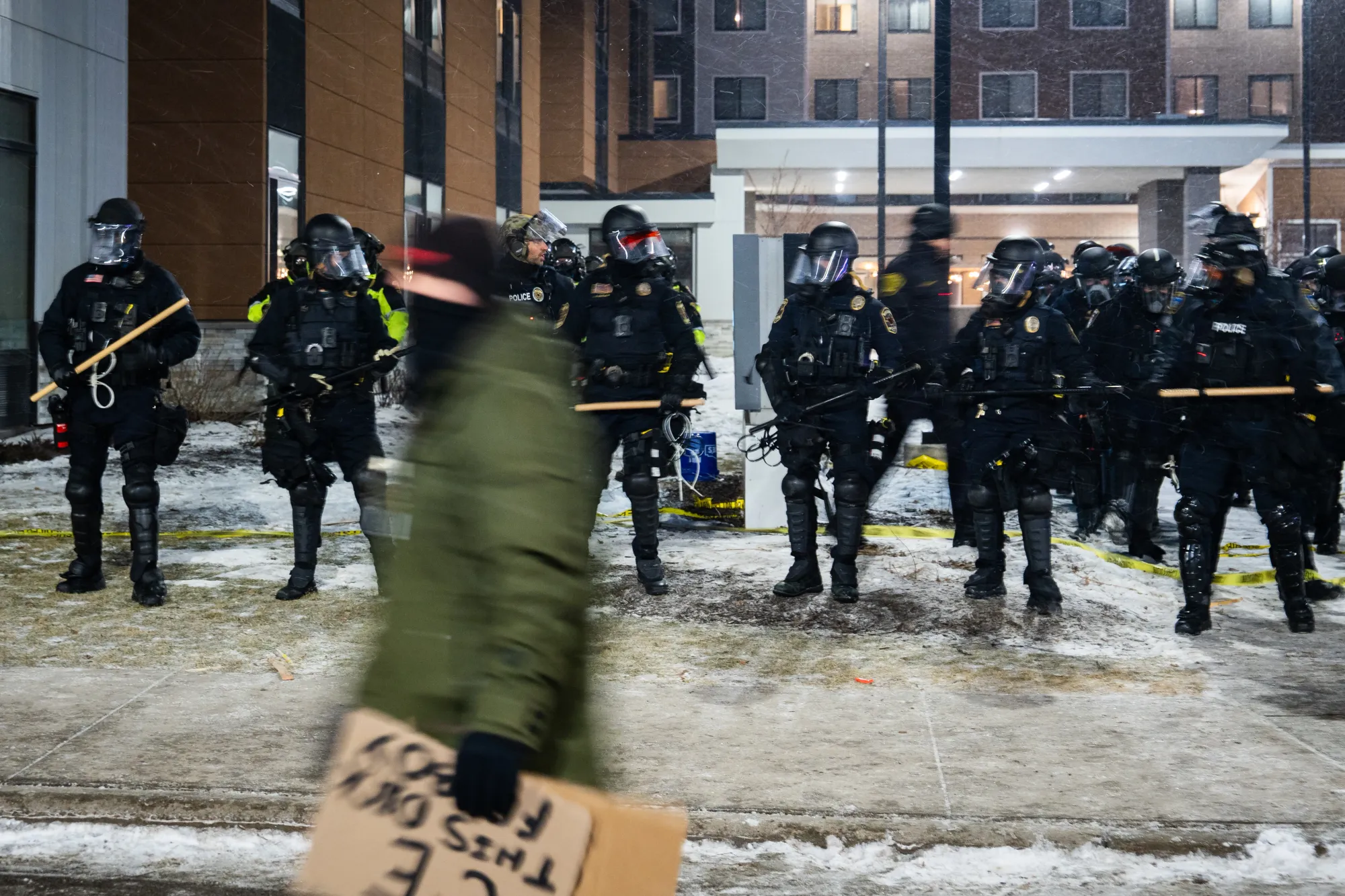
MINNEAPOLIS — Massive crowds turned out this week in a wave of anti-ICE protests after the fatal shooting of Alex Pretti by federal immigration agents, transforming a local incident into a national crisis over enforcement tactics, evidence handling and the limits of federal policing. Demonstrators in the Twin Cities and in dozens of other cities demanded accountability, called for the withdrawal or scaling back of aggressive enforcement operations in urban neighbourhoods, and pressed for independent investigations into the circumstances surrounding the killing. Authorities responded by announcing a federal civil rights inquiry and by saying they would gather video and other evidence to determine what happened.
What happened at the scene
On the morning of the shooting, federal agents conducting an immigration enforcement operation encountered a group of local demonstrators who said they were protesting the agents’ presence and tactics. According to preliminary agency notifications provided to congressional staff, officers sought to move certain civilians out of the roadway; a physical altercation followed, and the report states that two federal agents fired their weapons during the struggle. Multiple bystander recordings captured portions of the encounter, and those recordings became central to public scrutiny because elements of the videos did not fully align with some early public statements by officials.
Investigators now face the technical task of reconciling multiple camera angles, agency body-worn footage and radio communications to build a precise timeline of commands, movement and perceived threats. Specific forensic questions have emerged about whether the sequence of events warranted the level of force used and about how physical evidence was handled at the scene. The answers to those questions will be decisive for any criminal or administrative outcome.
Mass protests and national mobilisation
The killing catalysed coordinated demonstrations across numerous U.S. cities that combined student walkouts, workplace actions and sustained street marches in both large and smaller communities. Organisers described a national day of action aimed at pressing elected officials and agency leaders to withdraw or curtail aggressive federal immigration deployments in civilian neighbourhoods. In several locales the protests were large enough to interrupt transit and commercial activity, forcing municipal authorities to balance public-safety measures with the constitutional rights of protestors.
Activists linked the shooting to other fatal encounters reported during the same enforcement campaign and used those connections to argue that the operation produced an unacceptable pattern of risk to civilians. The persistence and scale of demonstrations have increased pressure on local leaders to demand rapid transparency from federal authorities and have prompted calls from some lawmakers for hearings and additional oversight.
Federal response and the civil rights probe
In response to public outcry and mounting scrutiny, the Department of Justice opened a civil rights investigation and assigned the FBI to lead evidence collection and witness interviews. Deputy Attorney General Todd Blanche described the inquiry as an effort to produce an independent assessment of whether federal agents willfully deprived an individual of rights protected under federal law. The initiation of a criminal civil-rights probe does not, by itself, indicate guilt; rather, it signals that investigators will apply the federal criminal standard and seek to determine whether legal thresholds for prosecution are met.
Investigators will seek to assemble body-worn camera footage and other video, agency radio transmissions and deployment logs, medical and autopsy records, weapon-custody paperwork and contemporaneous witness statements. Coordination among federal investigative units and with local authorities will be essential to preserve chain-of-custody and to avoid duplicative or conflicting investigative work. How those procedural matters are handled will influence not only the pace of the inquiry but also public confidence in any final findings.
Legal and procedural questions
Legal analysts emphasise that the core legal inquiry will be whether the agents’ use of force was objectively reasonable under applicable standards and whether any procedural lapses compromised the integrity of evidence or the transparency of internal reviews. Reported details about how a firearm recovered at the scene was removed and later documented have already prompted scrutiny and questions about whether evidentiary best practices were followed. Even small gaps in documentation can be consequential in subsequent criminal prosecutions or civil litigation because they affect evidentiary admissibility and the strength of factual narratives.
The case also exposes perennial jurisdictional frictions when federal officers operate in local spaces: state and local investigators often face legal and practical constraints on immediate access to federal scenes and materials. Parallel processes — agency internal reviews, federal criminal investigations and potential state or civil suits — may run on different timelines and with different disclosure rules, a dynamic that can produce competing accounts and complicate public understanding. Resolving those procedural and jurisdictional frictions will be central to producing a credible, durable record.
Political and policy consequences
Politically, the shooting has intensified scrutiny of a large-scale enforcement campaign that deployed thousands of federal immigration personnel to the region, and it has fuelled litigation and legislative interest in limiting certain domestic deployments. State and local officials urged de-escalation and greater transparency while oversight committees requested briefing documents and evidence. The incident has become a focal point in debates about federalism, public-safety doctrine and civil liberties, placing pressure on lawmakers to consider oversight remedies, statutory clarifications or administrative reforms.
Policy options under consideration include expanded body-worn camera requirements and coverage, standardised evidence-handling protocols, formal memoranda of understanding for federal-local cooperation and potential limits on certain tactical deployments in densely populated civilian areas. Any meaningful reform will require negotiating the balance between operational claims about public-safety imperatives and advocates’ demands for stronger civil-rights protections. The decisions made in coming weeks and months will shape not only local practice but also national precedent for domestic federal enforcement.
Scale and legal challenges
Reporting and filings with oversight bodies placed deployment figures in the low thousands, with some accounts citing roughly three thousand federal immigration and customs personnel assigned to the campaign. Those deployment figures have been cited repeatedly in lawsuits and legislative hearings as evidence that an unusually large federal presence altered local policing dynamics and increased the risk that routine interactions escalated into confrontations. Plaintiffs in at least one suit argued that the scale and nature of the deployments raised constitutional concerns about federal intrusion into local governance.
The reported size of the operation also informs legal theories that challenge the domestic scope of federal enforcement actions, and it frames the remedies advocates and officials are seeking. Courts will be asked to weigh operational justifications against claims of overreach and to consider whether additional statutory or regulatory constraints are warranted. Those legal contests are likely to proceed for months and will shape the long-term balance between federal enforcement prerogatives and local autonomy.
What comes next
Investigators will continue to gather and analyse evidence, and oversight committees may demand consolidated agency reports and public testimony to clarify the sequence of events. Parallel civil litigation and public-interest suits are likely to be filed seeking discovery and additional transparency while criminal investigators complete their inquiries. Local leaders will remain under pressure to manage protests and community relations even as legal and political processes unfold, and business and civic organisations will monitor disruptions that affect commerce and services.
The results of the civil-rights probe, including any decisions about charges, administrative discipline or referrals, will be a defining moment for both policy and public perception. How authorities handle evidence, communicate findings and reconcile multiple investigative tracks will determine whether this episode becomes a catalyst for structural reform or a contested chapter in the politics of enforcement. For now, the protests, legal filings and federal inquiry together underscore the depth of public concern about the conduct and oversight of domestic federal enforcement operations.
Written by Nick Ravenshade for NENC Media Group, original article and analysis.
Sources: AP News, Reuters, CBS News, The Intercept, The Guardian, Washington Post, MPR News, Los Angeles Times, ABC News, CNN
Photo: “Springhill Suites Noise Demo, Maple Grove” by Chad Davis, CC BY 4.0 | No photo changes
Author

Nick Ravenshade, LL.B., covers geopolitics, financial markets, and international security through primary documents, official filings, and open-source intelligence. Founder and Editor-in-Chief of NENC Media Group and WarCommons.
Sign up for NENC Now newsletters.
Stay up to date with curated collection of our top stories.