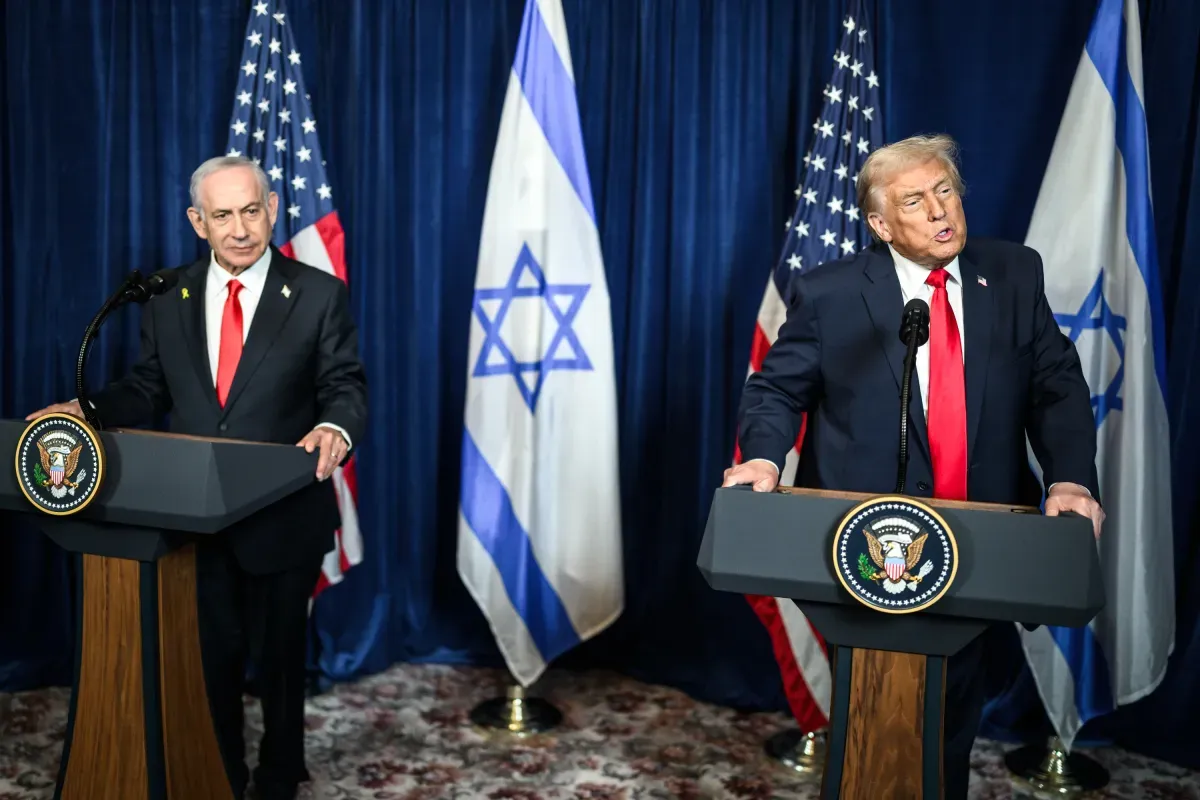
WASHINGTON — Israeli Prime Minister Benjamin Netanyahu announced on Feb. 12 that Israel has joined the international grouping convened by former U.S. President Donald Trump to coordinate post-ceasefire reconstruction and stabilization in Gaza, elevating a fragile initiative ahead of its first leaders’ meeting on Feb. 19. Public launch events in late January moved the project quickly from concept to a convening of state and private actors, and the timetable has already forced capitals and aid organizations to weigh whether participation will accelerate results or complicate existing humanitarian channels.
Supporters say the board can marshal funds, technical expertise and logistical capacity more rapidly than slower multilateral mechanisms. Critics counter that creating a parallel structure risks duplicating the United Nations’ coordination role, complicating aid delivery and weakening established accountability channels. The public confirmation of a major regional participant tightens the political stakes for the Feb. 19 meeting and frames a central choice for potential members: try to shape the initiative from within, or withhold endorsement until legal, oversight and inclusion questions are resolved.
Origins and stated purpose
The body was unveiled in late January with a published charter and a roster of founding participants drawn from state delegations, former officials and private sector figures. Its stated purpose centers on reconstruction, stabilization and the sequencing of technical assistance with security measures intended to reduce the chance of renewed hostilities. Organizers have outlined plans for a coordinating secretariat and technical clusters focused on shelter, utilities, public health and essential services, and they have emphasized a results-oriented, delivery-driven approach that prioritizes rapid, visible projects.
Those broad goals nonetheless leave open crucial questions about legal authority and operational design. The charter frames objectives but provides limited detail on how the board will interface with existing humanitarian coordination systems, how decisions will be enforced, and under what rules security arrangements would be negotiated. Capitals seeking to avoid legal or parliamentary exposure are asking for explicit oversight, procurement rules and disputes-resolution procedures before converting political statements into binding commitments.
Membership and legal tensions
A mixture of regional and non-Western states has signaled readiness to participate, while several traditional Western partners have voiced reservations or declined to join under the initiative’s present terms. Several governments have made participation conditional on guarantees for rights protections, independent monitoring and explicit integration with established multilateral agencies. Other potential members have flagged domestic legal constraints; legislatures and constitutional rules in some countries require formal approvals for international funding commitments or for the deployment of personnel.
Those patterns of acceptance and hesitation carry diplomatic signals that extend beyond reconstruction mechanics. Participation choices will determine who wields influence over reconstruction priorities and the sequencing of disarmament and governance tasks. Political leaders must also weigh reputational implications at home, where association with a forum perceived by some as bypassing established international norms could have electoral consequences and complicate relations with allied capitals that prefer more traditional multilateral pathways.
The question of Palestinian representation is central to the forum’s perceived legitimacy on the ground. Civic groups and regional actors emphasize that reconstruction processes imposed without meaningful local consultation often produce outcomes misaligned with community priorities and that may provoke local resistance. Projects lacking local buy-in frequently encounter security problems, contract disputes and long-term sustainability challenges that undermine the goals of recovery. Ensuring community participation in planning, transparent procurement and independent grievance mechanisms will be critical for building durable legitimacy.
The board’s early decisions will also have geopolitical implications that shape alliances and donor behavior. Donor actions, the composition of working groups and choices about operational control will signal which governments and private entities influence the agenda. Analysts identify plausible scenarios after the Feb. 19 meeting. In a cooperative outcome, participants secure time-limited pledges for immediate humanitarian needs, establish technical clusters that coordinate closely with existing multilateral agencies, and agree to transparent oversight measures. In a contentious path, the board could create parallel administrative structures that complicate aid distribution, provoke diplomatic protest from nonparticipants, and invite legal challenges in donor capitals; each path carries risks for effectiveness and legitimacy.
Funding, operational constraints and oversight
The initiative emphasizes private-sector participation as a way to leverage additional capital, but mobilizing private funds for humanitarian reconstruction is complex. Private financiers typically require robust legal protections, clear procurement rules and risk mitigation mechanisms, and they often prefer projects with predictable revenue streams or sovereign guarantees. Absent standardized contracting, independent oversight and de-risking instruments, private engagement may concentrate on visible infrastructure while essential public services receive less attention.
Accountability mechanisms will therefore be decisive in sustaining donor and investor confidence. Independent monitoring, transparent auditing and accessible grievance procedures are prerequisites for continued engagement by governments, multilateral lenders and philanthropies. Civil society groups and watchdog organizations will press for these safeguards, and parliaments in contributor countries are likely to demand oversight hearings and measurable benchmarks for success. Operational realities on the ground — securing safe access, clearing hazards, and restoring logistics — will test the board’s capacity to translate pledges into projects within realistic timelines.
Domestic political calendars and legal reviews will shape how quickly governments convert rhetorical support into concrete funding or deployments. Even politically sympathetic executives face budget processes, parliamentary scrutiny and judicial oversight that can delay implementation. Those constraints mean that the board’s stated emphasis on rapid delivery must be reconciled with legal, procedural and operational realities; without that reconciliation, pledges risk remaining symbolic rather than transformative.
The confirmation of a prominent regional participant raises the initiative’s political profile and intensifies scrutiny from allies, donors and civil society. The Feb. 19 meeting will reveal whether organizers can produce legally robust, inclusive procedures and transparent financing arrangements that complement, rather than displace, established humanitarian channels. Success would require marrying political momentum with clear governance, independent oversight and meaningful local participation; failure could deepen fragmentation in international approaches to Gaza and complicate an already fraught humanitarian landscape.
Written by Nick Ravenshade for NENC Media Group, original article and analysis.
Sources: Reuters, White House, Al Jazeera.
Photo: “Official White House photograph” / Source: The White House, https://www.whitehouse.gov/wp-content/uploads/2025/12/P20251229DT-0522.jpg?resize=1200,800 , Retrieved 2026‑02‑12. No photographer credit listed; image provided as a United States Government work. Used with editorial attribution.



Comments ()