Trump’s ‘concept’ Greenland deal halts Europe tariffs as markets, Seoul growth data and AI jitters reshape Davos mood
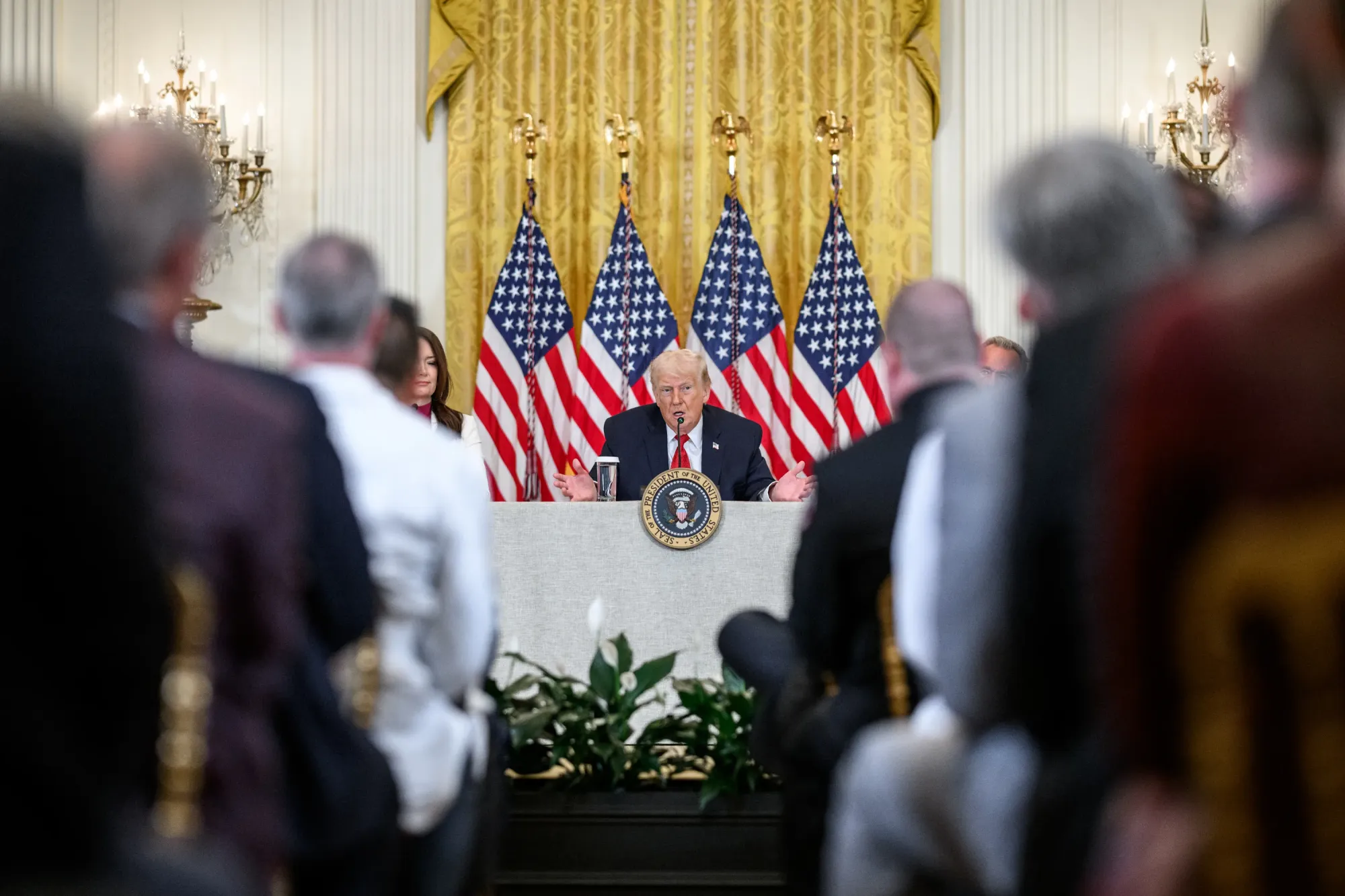
DAVOS — A loosely defined “concept” of a deal over Greenland allowed U.S. President Donald Trump to step back from threatened tariffs on European allies at the World Economic Forum, capping a volatile sequence that rippled through trade diplomacy, global growth expectations and equity markets as of 21 January 2026. The shift, outlined in a television interview and subsequent remarks, moved the immediate tariff clock off Europe but left key questions over the substance, durability and broader geopolitical implications of any eventual agreement on the Arctic territory. As the news broke, European lawmakers froze work on a separate trade accord with Washington, South Korean data showed growth missing forecasts, U.S. stocks reversed earlier losses and one major artificial intelligence stock flashed a bearish technical pattern, highlighting how interlinked trade, macro and technology narratives have become.
A Greenland ‘framework’ that pauses tariffs, not questions
Trump told an interviewer in Davos that he and the NATO secretary general had established what he described as a “framework” for a future agreement on Greenland, later characterizing it as more of a “concept of a deal” than a detailed accord. He linked that understanding directly to his decision to call off a package of punitive tariffs on several European countries that had been slated to begin on 1 February, saying he would no longer move ahead with the measures because of the Greenland talks. The comments followed weeks of escalating rhetoric in which he had threatened levies of up to 25% on a group of NATO allies over their resistance to U.S. ambitions regarding the island’s political and strategic status.
Details of the Greenland framework remain sparse. Trump suggested that the conceptual plan would involve cooperation between the United States and European partners on a missile‑defense system referred to as “Golden Dome,” alongside arrangements granting U.S. access to mineral resources on and around the island. When pressed for specifics, he acknowledged the complexity of the proposal and indicated that further explanation would come “down the line,” reinforcing the perception in markets that the announcement halted tariffs more than it resolved underlying disputes. For diplomats and investors alike, the core uncertainty is whether the framework will harden into a binding arrangement or remain an informal political understanding vulnerable to shifts in domestic and alliance politics.
European lawmakers hit pause on trade accord
While the immediate tariff threat eased, policymakers in Europe signaled that the episode would carry consequences for the broader relationship. A senior member of the European Parliament’s trade committee said lawmakers had suspended work on a trans‑Atlantic trade agreement in light of Trump’s earlier threats to impose unilateral tariffs tied to Greenland, arguing that such measures were incompatible with the spirit of the deal. The committee’s leadership has argued in past disputes that using tariffs as leverage in territorial or security debates undermines confidence in the rules‑based order that underpins European and global trade policy.
The suspension does not terminate negotiations outright, but it raises the bar for any future agreement and highlights growing impatience within key EU institutions over what they see as unpredictable U.S. tactics. EU officials are also weighing their own strategic interests in the Arctic, including shipping lanes, energy security and climate‑change impacts, and have repeatedly emphasized that any arrangement concerning Greenland must respect both international law and the rights of the territory’s population. For businesses on both sides of the Atlantic, the latest pause injects fresh uncertainty into an environment already shaped by past trade wars, supply‑chain reconfiguration and shifting regulatory agendas on technology, energy and defense.
South Korea’s growth miss underscores fragile global backdrop
Away from the Davos stagecraft, new data from South Korea offered a reminder that global growth remains sensitive to both trade frictions and sector‑specific shocks. Official figures showed the economy expanding by 1.5% in the fourth quarter from a year earlier, slower than the 1.8% pace in the previous quarter and below economists’ expectations for roughly 1.9% growth, with quarterly output contracting by 0.3% compared with a consensus forecast for modest expansion. The disappointment marked the sharpest quarterly slowdown since late 2022 and followed a year in which overall growth was the weakest since the pandemic period of 2020.
Analysts attributed the softness to a combination of weaker construction, softer exports and fading effects from earlier fiscal support, even as private consumption and government spending provided some offset. The external environment remains complicated by lingering tariff disputes and sector‑specific measures, including higher U.S. levies on certain imported AI chips aimed at boosting domestic semiconductor production. South Korean officials have highlighted a recent bilateral trade arrangement with Washington involving large‑scale investment commitments and lower tariffs on autos and parts, but have also warned that renewed tariff uncertainty could weigh on an export‑dependent economy navigating rapid change in global technology supply chains.
Markets rebound as Washington steps back from tariff brink
Equity markets, which had come under pressure when the Greenland‑linked tariff threats first surfaced, responded positively to the apparent de‑escalation. U.S. stock indices rebounded on the day of Trump’s Davos remarks, with major benchmarks reversing a portion of the prior session’s declines as traders recalibrated the likelihood of an immediate trans‑Atlantic trade confrontation. Market participants pointed to the sequence of events, in which a sharp sell‑off on tariff fears was followed by a relief rally once the president publicly tied his decision to stand down to the Greenland framework.
The move illustrates how sensitive risk assets remain to sudden shifts in trade rhetoric, particularly when tariffs are framed around security and territorial issues rather than conventional economic disputes. Futures and exchange‑traded instruments linked to European equities also stabilized after earlier declines, though broader indices in the region remained under pressure from structural concerns about growth, energy prices and fiscal constraints. For portfolio managers, the episode reinforced the need to stress‑test strategies against geopolitical scenarios in which tariff threats and reversals can alter market direction in hours, even when underlying earnings trends change more slowly.
AI “death cross” adds a technical chill to tech enthusiasm
Amid the macro and geopolitical headlines, one prominent AI‑linked stock flashed what technicians call a “death cross,” a pattern that occurs when an asset’s short‑term moving average falls below a longer‑term moving average, often interpreted as a bearish signal. In this case, chart watchers noted the crossover as evidence that the stock’s recent downtrend had gathered enough momentum to drag its intermediate‑term trend lower, after a prolonged period of gains tied to enthusiasm for generative AI. The signal does not guarantee future losses, but it can shape positioning decisions among traders who incorporate technical indicators into risk management and timing.
The appearance of a death cross in a high‑profile AI name also plays into a broader debate over whether the sector has moved into a more volatile, post‑honeymoon phase in which investors demand clearer evidence of sustainable earnings. As macro conditions tighten and policy uncertainty rises, richly valued growth sectors often see sharper swings when expectations are reset, particularly if they sit at the intersection of trade, industrial and regulatory agendas, as AI now does. For Davos participants, the combination of geopolitical bargaining over critical minerals and missile defense, growth data from export‑heavy economies and technical signals in AI equities underscored how closely markets are tying the technology’s prospects to a shifting strategic landscape.
Strategic and policy implications beyond Davos
The sequence of events in Davos highlights several structural themes that extend beyond the immediate news cycle. First, it shows how quickly trade threats linked to territorial or security issues can reverberate through alliance structures, official negotiations and financial markets, even when they are later dialed back in response to diplomatic engagement. Second, it underscores the degree to which export‑oriented economies in Asia and Europe remain exposed to policy swings in Washington at a time when they are also navigating domestic demographic challenges and sectoral transitions.
For policymakers, the Greenland framework and tariff reprieve may buy time but do not resolve underlying tensions over Arctic governance, resource access and defense posture. European institutions have signaled that they will scrutinize any eventual agreement carefully, weighing it against commitments to international law, environmental stewardship and the interests of local communities. In parallel, governments in Asia are likely to continue diversifying trade relationships and supply chains to reduce vulnerability to shocks arising from disputes to which they are not direct parties, but which can affect demand for their exports and the cost of critical inputs.
For investors, the key lesson is that the convergence of geopolitics, macro data and sector‑specific signals such as the AI death cross can reshape risk perceptions more quickly than traditional economic models might suggest. As of 21 January 2026, the immediate threat of new U.S. tariffs on European partners has receded, but the same underlying forces that drove the Greenland episode—competing security priorities, contested resource claims and strategic technology rivalries—remain firmly in place. How those forces evolve will determine whether Davos 2026 is remembered as a turning point toward more stable collaboration or as a temporary pause in a longer cycle of disruption.
Written by Nick Ravenshade for NENC Media Group, original article and analysis.
Sources: CNBC, Reuters, ABC News, FastBull, World Economic Forum transcripts and clips, academic and policy research (Elsevier, JWSR, Taylor & Francis, arXiv).
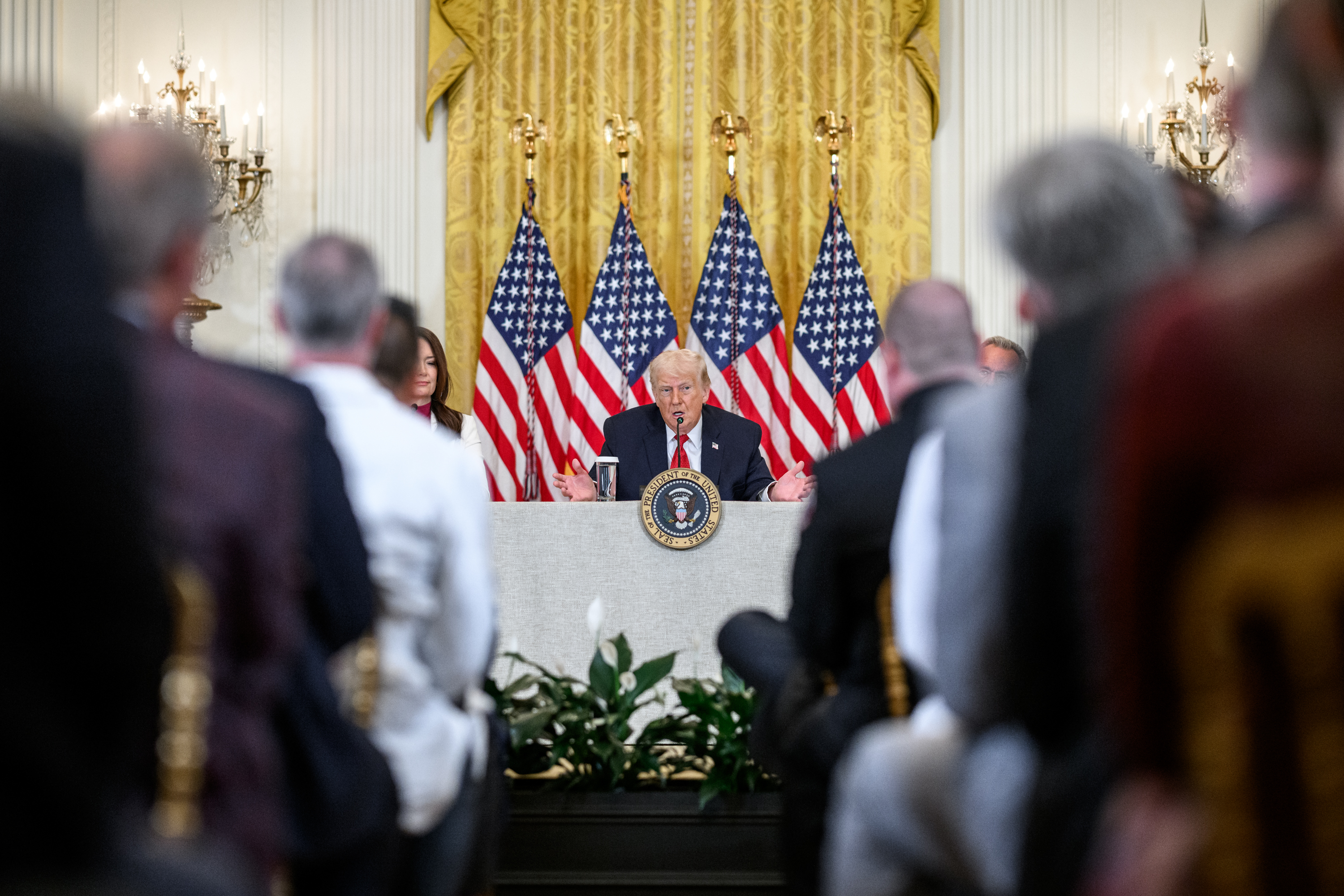
Photo: “Official White House photograph” / Source: The White House, https://www.whitehouse.gov/wp-content/uploads/2026/01/p20260103mr-0819_55022162726_o.jpg, Retrieved 2026‑01‑22. No photographer credit listed; image provided as a United States Government work. Used with editorial attribution.
Author
Nick Ravenshade, LL.B., covers geopolitics, financial markets, and international security through primary documents, official filings, and open-source intelligence. Founder and Editor-in-Chief of NENC Media Group and WarCommons.
Sign up for NENC Now newsletters.
Stay up to date with curated collection of our top stories.