Iranian Ballistic Missile Kills Eight in Beit Shemesh After Penetrating Israel's Multi-Layered Air Defences, IDF Launches Interception Failure Investigation
BEIT SHEMESH — An Iranian ballistic missile struck a residential area of the central Israeli city of Beit Shemesh on Sunday afternoon, killing eight people and wounding at least 28 others, making it the deadliest single incident on Israeli soil since the conflict between Iran and the U.S.-Israeli coalition began on Saturday morning. Israel's national emergency medical service declared eight fatalities at the scene and transported the wounded to hospitals in Jerusalem and central Israel, including two people in serious condition. The Times of Israel subsequently reported the toll had risen to nine as rescue workers extracted additional bodies from the rubble, though the eight-fatality figure represents the confirmed MDA count as of early Sunday evening.
For full background, see prior coverage:
 Nick Ravenshade
A Direct Hit on a Public Bomb Shelter and the Failure It Exposes
The most operationally significant detail to emerge from Sunday afternoon's strike is where most of the victims were located when they died. Jerusalem District police chief Deputy Commissioner Avshalom Peled told reporters at the scene that the missile scored a direct impact on a public bomb shelter and that most, if not all, of those killed had been sheltering inside it. "As far as I know, it was likely a direct impact on the shelter and most, if not all of those killed, were in there," he said. He acknowledged that Israeli authorities had been aware since the June 2025 round of fighting with Iran that public shelters are structurally incapable of withstanding a direct ballistic missile impact at full force.
That admission carries serious implications for Israel's civil defence posture. The Home Front Command issued guidance throughout the conflict directing civilians to take cover in shelters and safe rooms upon hearing air raid sirens, presenting shelter compliance as the primary survival measure available to the public. If a direct hit on a public shelter now represents a confirmed lethal scenario rather than a theoretical one, the guidance effectively asks civilians to take cover in structures that cannot protect them from the precise type of weapon Iran is deploying. Peled stopped short of advising civilians to stop using shelters, instead continuing to urge compliance on the grounds that most impacts are not direct hits and that shelter significantly improves survival odds from blast and shrapnel effects at greater distances.
Iron Dome, David's Sling, Arrow: How One Missile Got Through
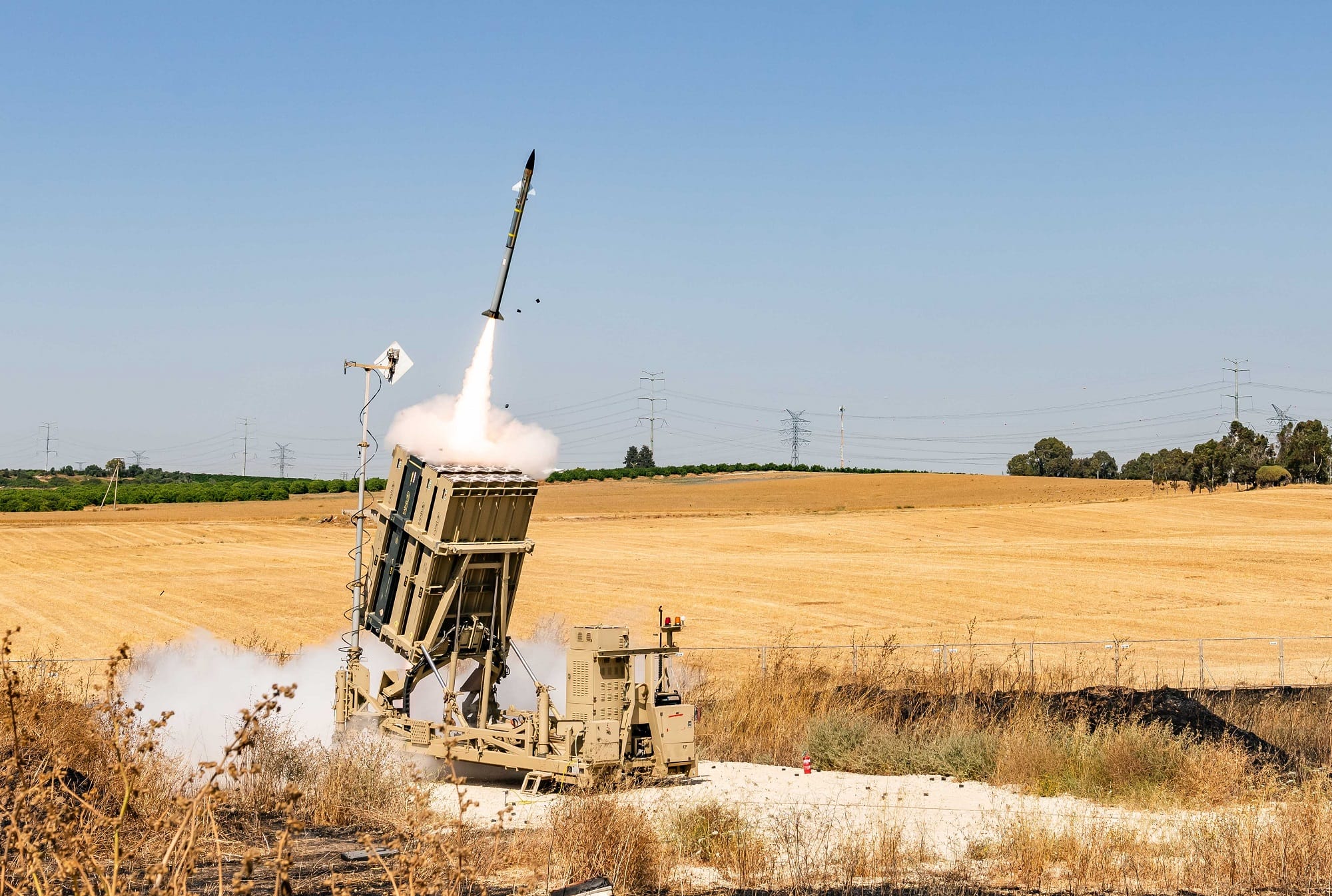
The Beit Shemesh strike is already the subject of a formal IDF investigation into why the missile was not intercepted. Israel's air defence architecture is layered specifically to address different threat types at different altitudes and ranges: Iron Dome handles shorter-range rockets and artillery shells, David's Sling targets medium-to-long-range ballistic missiles, and the Arrow system is designed for high-altitude exoatmospheric interception of long-range ballistic missiles. In this conflict the IDF has publicly stated that the vast majority of incoming Iranian projectiles have been intercepted, and the military has previously acknowledged in briefings that no air defence system provides a guaranteed 100 percent interception rate against a sustained and varied volley.
The details of why this particular missile penetrated the defence network had not been officially confirmed as of Sunday evening. Possible factors under investigation, based on publicly available doctrine, include saturation tactics in which a large simultaneous volley overwhelms the system's engagement capacity, technical failure in one of the interception layers, or a missile profile designed to challenge interception parameters. Until the IDF publishes its findings, the precise reason remains unverified. What is confirmed, however, is that the strike on Beit Shemesh represents the first time in this conflict that a ballistic missile has caused mass civilian fatalities inside a major Israeli urban area, crossing a threshold that will intensify domestic pressure on the Israeli government to demonstrate measurable progress in suppressing Iran's launch capability.
Scale of Damage and the Broader Picture of Sunday's Missile Campaign
Beyond the casualty figures, the physical damage at the strike site was substantial. The missile destroyed a synagogue in the residential neighbourhood, caused severe structural collapse to a multi-storey residential building, and produced extensive secondary damage to surrounding homes and a public bomb shelter. Footage released by emergency services showed a major impact crater and collapsed structural elements, with firefighters working to suppress fires while search teams continued to probe the rubble for additional survivors or victims. The IDF deployed a medical helicopter to the site for emergency evacuation of the critically wounded, and a 4-year-old boy was among those transferred to Shaare Zedek Medical Centre in Jerusalem, admitted to its trauma unit in moderate condition.
The Beit Shemesh strike did not occur in isolation. Iran's Revolutionary Guard Corps declared another large-scale retaliatory missile barrage on Sunday, and missile alerts sounded across central and northern Israel throughout the afternoon. A simultaneous strike hit a public building in Rosh Ha'ayin, lightly wounding one person. The United Arab Emirates, which confirmed on Sunday that three foreign nationals had been killed on its soil by Iranian missile and drone attacks, announced its air defences had by that point intercepted 167 missiles and 541 Iranian drones. The breadth of that combined figures illustrates the sheer volume of projectiles Iran has committed to its retaliatory campaign in the first 36 hours of open conflict, of which the Beit Shemesh missile represented a single penetrating exception in an otherwise largely intercepted but relentless barrage.
Written by Nick Ravenshade for NENC Media Group, original article and analysis.
Author

Nick Ravenshade, LL.B., covers geopolitics, financial markets, and international security through primary documents, official filings, and open-source intelligence. Founder and Editor-in-Chief of NENC Media Group and WarCommons.
Sign up for NENC Now newsletters.
Stay up to date with curated collection of our top stories.