BOGOTÁ — Colombian President Gustavo Petro told an international broadcaster that oil, not narcotics, is “at the heart of” what he described as a United States pressure campaign on Venezuela, a claim that sharpens regional tensions and raises questions about the strategic drivers behind recent US policy and military posture in the Caribbean and Pacific.
The claim and its immediate context
In a televised interview, the Colombian president framed recent US actions toward Venezuela as motivated primarily by access to the South American country’s oil reserves. He said the calculation driving Washington’s posture was not principally the fight against drug trafficking or the promotion of democratic institutions but rather a negotiation over energy resources. The remark was delivered in a wide‑ranging exchange that also touched on bilateral relations, regional security, and domestic political pressures.
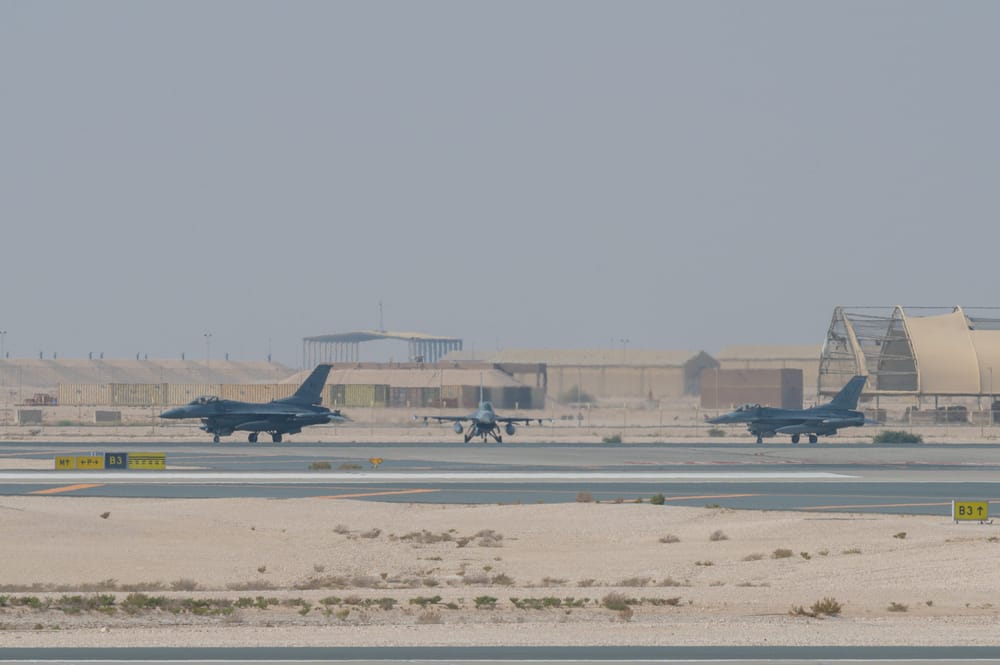
The interview came as US military activity in nearby maritime zones and airspace has increased, according to contemporaneous reporting. That operational uptick has been cited by regional leaders as a factor intensifying diplomatic friction. The president’s comments therefore arrived at a moment when strategic signaling and public narratives about motives and objectives are particularly consequential for policymaking and public opinion across Latin America.
Petro’s framing reframes a familiar debate about the drivers of great‑power policy in resource‑rich regions. It places energy security and commercial access at the center of a dispute often presented in moral or legal terms. Whether that framing will alter the calculations of capitals engaged in the dispute depends on how allies and adversaries interpret the evidence and on the domestic political constraints facing each government.
Political and diplomatic implications
If energy access is indeed a central motive for external pressure, the diplomatic consequences are significant. A policy perceived as primarily resource‑driven risks eroding the normative case for intervention or coercive measures, complicating efforts to build broad international coalitions. It also reshapes the bargaining dynamics between the Venezuelan government and external actors, potentially hardening positions on both sides.
Domestically, the Colombian president’s statement plays to a constituency skeptical of foreign intervention and wary of external influence over national and regional affairs. It also places pressure on allied governments to clarify their objectives and to demonstrate how their actions align with stated priorities such as counter‑narcotics, democracy promotion, or humanitarian concerns. For the United States, the political cost of a perception that policy is driven by resource acquisition could be high among international audiences and within domestic constituencies that oppose perceived neo‑imperial behavior.
Diplomatically, the remark may prompt renewed efforts at messaging and evidence‑building. Governments that deny resource motives will likely emphasize legal, security, and humanitarian rationales for their actions. Opponents will press for transparency on military deployments, commercial negotiations, and sanctions regimes. The net effect could be a more contested information environment in which each side seeks to shape international opinion and legal narratives.
Economic and energy stakes
Venezuela’s hydrocarbon endowment is central to the economic calculus. The country’s reserves have long been described as among the largest in the world, and control over those resources carries implications for global oil markets, investment flows, and long‑term energy security strategies. Access to Venezuelan oil would affect not only producers and consumers but also the strategic calculations of states seeking to diversify supply chains or to secure long‑term contracts.
Commercial actors are sensitive to political risk. Any perception that state policy is aimed at securing resource access through coercive means would raise the cost of investment and complicate contractual negotiations. Energy companies and trading houses typically seek legal certainty and stable regulatory frameworks; heightened geopolitical competition increases the probability of sanctions, asset freezes, and contested ownership claims, all of which depress investment and complicate market planning.
The energy dimension also intersects with sanctions policy. Measures that restrict trade or financial flows can have the effect of reshaping who benefits from a country’s resources and under what terms. If sanctions are used selectively to alter ownership patterns or to pressure a government into concessions, critics will argue that the measures serve strategic economic ends as much as political or human rights objectives.
Security dynamics and military signaling
The recent increase in military activity in the region has multiple interpretations. For some actors, enhanced naval and air patrols are defensive measures aimed at countering illicit trafficking and protecting maritime routes. For others, they are a form of coercive diplomacy intended to signal resolve and to shape bargaining leverage. The presence of military assets near contested waters or airspace can raise the risk of miscalculation and accidental escalation.
Military signaling also affects alliance politics. Partner states must decide whether to align with a posture that emphasizes deterrence and pressure or to advocate for de‑escalation and multilateral mediation. The choice has operational consequences for joint exercises, intelligence sharing, and basing arrangements. It also has reputational consequences for states that seek to present themselves as defenders of international law and human rights.
The security calculus is further complicated by nonstate actors and transnational criminal networks. If counter‑narcotics is a genuine priority, military deployments must be paired with law enforcement cooperation, judicial capacity building, and anti‑corruption measures. Absent that comprehensive approach, military pressure alone is unlikely to produce sustainable reductions in illicit trafficking and may instead exacerbate humanitarian and governance challenges.
Regional responses and potential pathways
Regional governments are likely to respond in several ways. Some will echo the Colombian president’s concerns and call for greater transparency and multilateral oversight. Others will emphasize the need for stability and for mechanisms that separate humanitarian and security objectives from commercial negotiations. Multilateral institutions and regional forums may be asked to convene fact‑finding missions, to propose confidence‑building measures, or to mediate technical talks on energy and security.
Practical pathways forward include negotiated frameworks that explicitly separate resource access from political recognition, third‑party monitoring of military activity, and multilateral mechanisms for managing energy contracts and sanctions relief. Such arrangements would require careful sequencing and credible verification to be acceptable to all parties. They would also demand political capital from leaders who must sell compromise to skeptical domestic audiences.
Absent credible multilateral mechanisms, the most likely near‑term outcome is continued contestation: heightened diplomatic rhetoric, episodic military signaling, and a contested information environment in which each side seeks to shape international opinion. That environment increases the risk of missteps and reduces the space for quiet diplomacy that might otherwise produce technical agreements on issues such as maritime safety, counter‑trafficking cooperation, and humanitarian access.
What to watch next
Analysts and policymakers will monitor several indicators to assess whether the dispute moves toward de‑escalation or further confrontation. These include changes in military deployments and patrol patterns, the emergence of formal negotiation tracks or third‑party mediation offers, shifts in sanctions policy or commercial negotiations, and public statements by key capitals clarifying objectives. Domestic political developments in the countries involved will also be decisive, as leaders balance international strategy with electoral and legislative constraints.
Ultimately, the Colombian president’s assertion reframes a debate about motives and strategy in a region where resources, security, and sovereignty intersect. Whether that framing alters policy choices will depend on the evidence each side marshals, the credibility of their narratives, and the willingness of regional and global actors to invest in multilateral solutions that reduce the incentives for coercive competition.
Written by Nick Ravenshade for NENC Media Group, original article and analysis.
Sources: CNN, The Hill, Firstpost, TRT World, Egypt Independent.
Photo: Jared Evans / Unsplash
Author

Nick Ravenshade, LL.B., covers geopolitics, financial markets, and international security through primary documents, official filings, and open-source intelligence. Founder and Editor-in-Chief of NENC Media Group and WarCommons.
Sign up for NENC Now newsletters.
Stay up to date with curated collection of our top stories.