Iran Hits CIA Station in Riyadh, Dubai Consulate and Qatar's Al Udeid Air Base in Coordinated Strike Wave as US Orders Mass Gulf Evacuation
WASHINGTON — Iranian drone and missile strikes hit the CIA's intelligence station inside the US Embassy compound in Riyadh, the US consulate in Dubai, and al-Udeid Air Base in Qatar, amounting to the broadest single-day assault on American diplomatic and military infrastructure across the Gulf region, as the State Department on Tuesday shuttered embassies in Saudi Arabia, Kuwait, and Lebanon and ordered non-emergency personnel out of at least six countries.
CIA Station in Riyadh Sustains Structural Damage
Two suspected Iranian drones struck the CIA's station inside the US Embassy compound in the Saudi capital on Monday, with reporting confirmed by multiple news organizations on Tuesday. While both the US and Saudi governments had acknowledged drone impacts on the embassy complex, neither initially disclosed that the intelligence hub was among the targets. An internal State Department alert, obtained by multiple outlets, described structural damage to the building, including partial roof collapse and interior smoke contamination throughout the facility. Embassy personnel were sheltering in place at the time of reporting, with no CIA casualties confirmed. The CIA declined to comment. Saudi Arabia's Defense Ministry characterized the strike as causing "limited fire and minor material damage," and said its air defenses intercepted four additional drones targeting Riyadh's Diplomatic Quarter.
The targeting of a known intelligence hub inside an allied capital carries implications that extend well beyond the physical damage sustained. Intelligence stations embedded in embassy compounds typically coordinate counterterrorism liaison work, signals collection, and human intelligence networks that underpin regional threat assessment for both the United States and its partners. Even without confirmed personnel losses, compromising or forcing offline a facility of that nature disrupts bilateral intelligence sharing with Riyadh at precisely the moment the conflict demands it most. Iran's Islamic Revolutionary Guard Corps stated publicly that all American "political centers" across the region are designated targets, a posture that formally broadens the operational risk profile for every US intelligence hub still active in the Gulf.
Dubai Consulate and al-Udeid Air Base Among Confirmed Targets
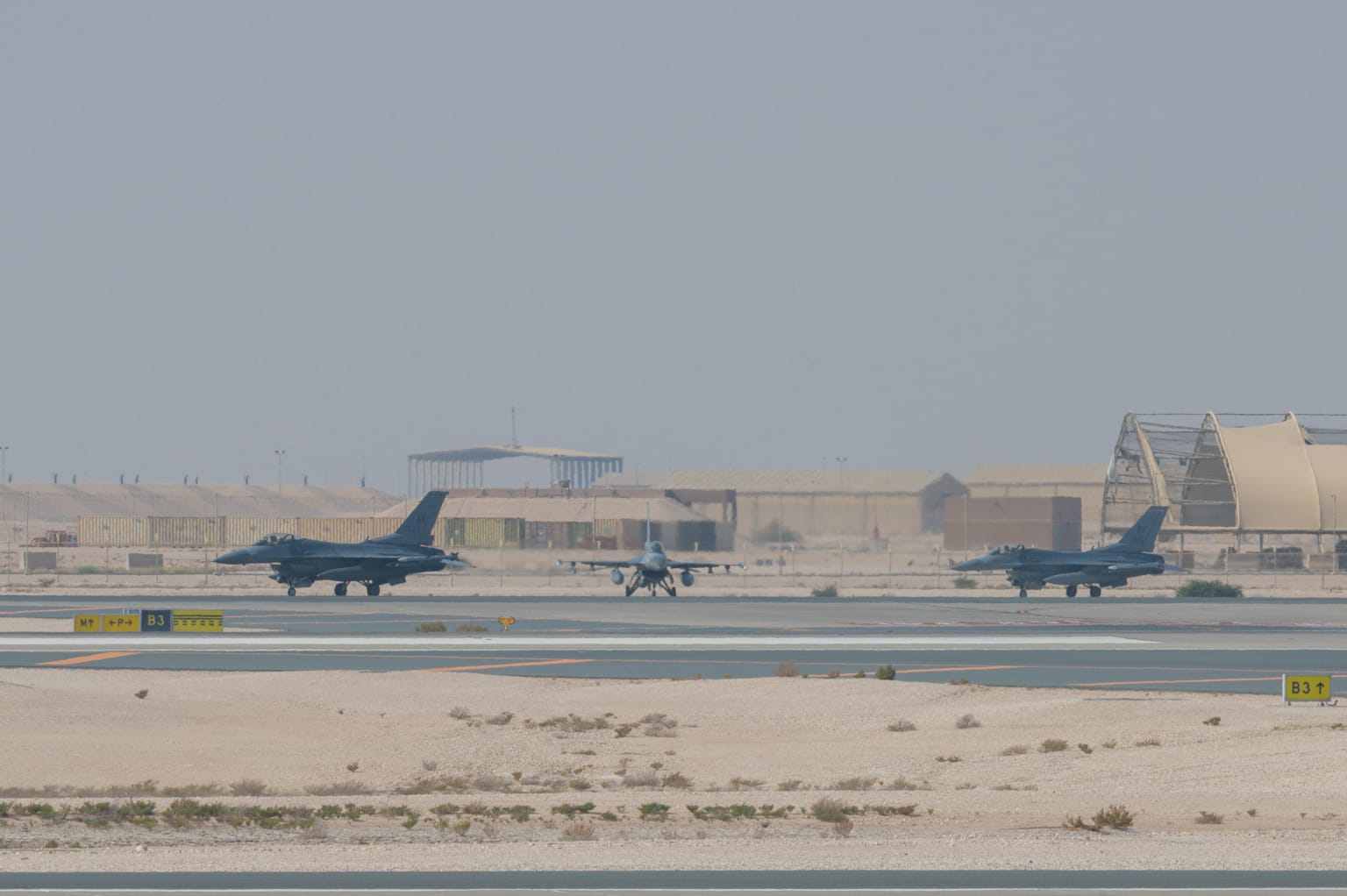
An Iranian drone struck the US consulate in Dubai and ignited a fire that UAE authorities said was contained with no injuries to personnel, with contingency protocols credited for the fast response. All consulate staff were accounted for, according to US officials. Separately, al-Udeid Air Base in Qatar, which serves as the forward headquarters of US Central Command and houses approximately 10,000 American military personnel, sustained a strike in what constitutes one of the most consequential targeting decisions of Iran's retaliatory campaign to date. Qatar's Foreign Ministry spokesman Majed Al Ansari said the attacks "will not go unanswered." The full extent of damage to al-Udeid remained unverified as of Tuesday evening, with the Pentagon declining to publicly confirm the scope of impact.
The geographic span of the confirmed hits on March 2 and 3 points to a coordinated target set rather than sequential improvisation. Striking a diplomatic mission in Dubai, a covert intelligence facility in Riyadh, and the largest US military base in the Middle East in Qatar within roughly 24 hours reflects a targeting architecture that spans multiple Gulf states simultaneously. UAE defense tracking data, current as of March 3, recorded 689 drone launches and 174 ballistic missiles fired in Iran's broader regional campaign, with the majority intercepted by Gulf air defense systems, though a significant number reached their targets and caused structural damage. The IRGC's public declaration that US military and political infrastructure constitutes a legitimate target category formalizes a posture that Gulf governments will now be forced to weigh against their own security partnerships with Washington.
Embassies Closed, Mass Evacuation Ordered Across the Gulf
The State Department on Tuesday ordered the departure of all non-emergency US government personnel and their families from Kuwait, Bahrain, Iraq, Qatar, Jordan, and the United Arab Emirates. The US Embassy in Kuwait announced it had closed indefinitely. The embassy in Saudi Arabia issued a shelter-in-place directive for American citizens in Riyadh, Jeddah, and Dhahran, instructing them to avoid the compound entirely. The embassy in Lebanon also closed. Assistant Secretary of State for Consular Affairs Mora Namdar directed Americans across more than a dozen Middle Eastern countries, including Iraq, Jordan, Lebanon, and Israel, to depart immediately using any available commercial transport.
The breadth of simultaneous closures and drawdown orders carries no modern precedent in the region's diplomatic history. Shuttering embassies in countries that are formal US defense treaty partners, including Qatar, which hosts US Central Command, signals that Washington has concluded it can no longer guarantee the physical security of its accredited missions under the current operational tempo of Iranian strikes. The US Embassy in Jerusalem acknowledged separately that it was unable to directly assist Americans seeking to depart Israel, given the severe degradation of regional commercial aviation. For Gulf governments already strained by Iranian strikes on their own territory, the visible retreat of American diplomatic infrastructure risks complicating alliance management, basing arrangements, and the political will of host nations to sustain US military presence at the moment that presence is most operationally engaged.
For full background, see prior coverage at:
 Nick Ravenshade
Written by Nick Ravenshade for NENC Media Group, original article and analysis.
Author

Nick Ravenshade, LL.B., covers geopolitics, financial markets, and international security through primary documents, official filings, and open-source intelligence. Founder and Editor-in-Chief of NENC Media Group and WarCommons.
Sign up for NENC Now newsletters.
Stay up to date with curated collection of our top stories.