Iran's Nuclear Program Was "Obliterated" — Then Wasn't: How Trump's Own Claims Are Undermining the Case for a New Strike
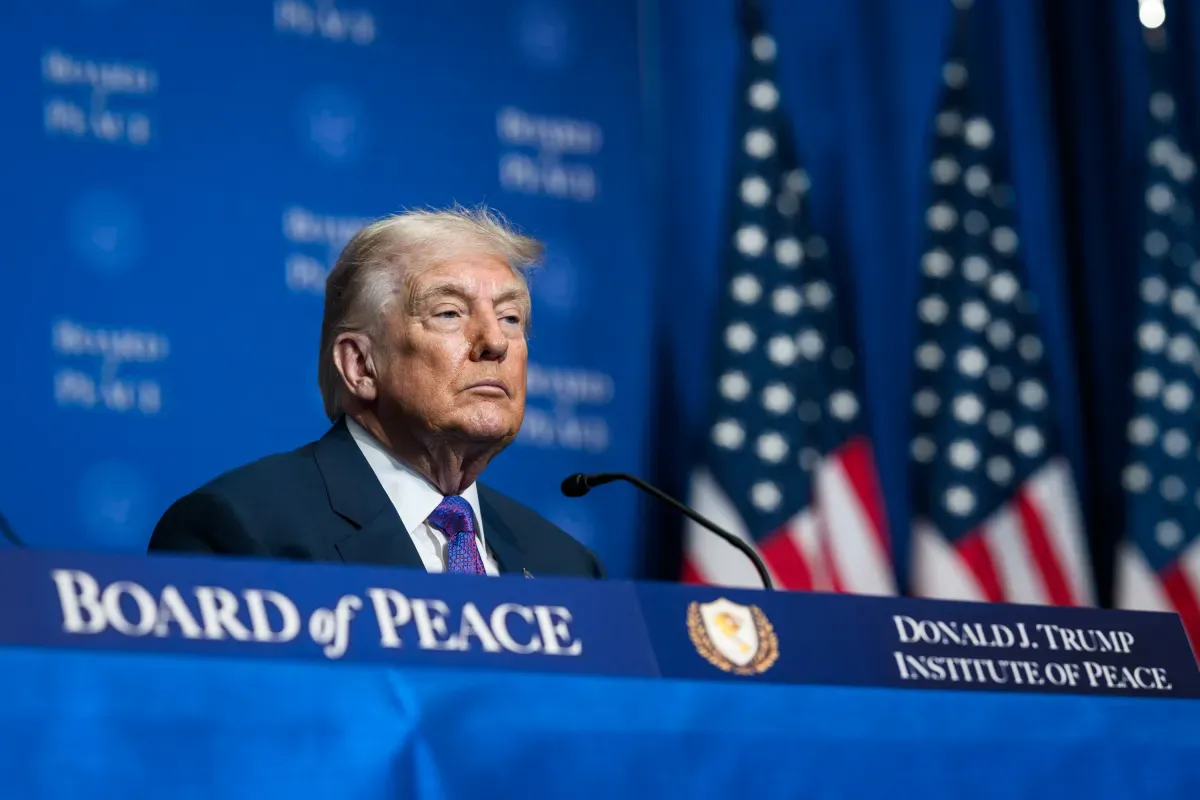
WASHINGTON — As the Trump administration signals it may launch a second military campaign against Iran's nuclear infrastructure, a widening contradiction sits at the center of its public case: for eight consecutive months, President Donald Trump declared that those capabilities had been thoroughly and permanently destroyed.
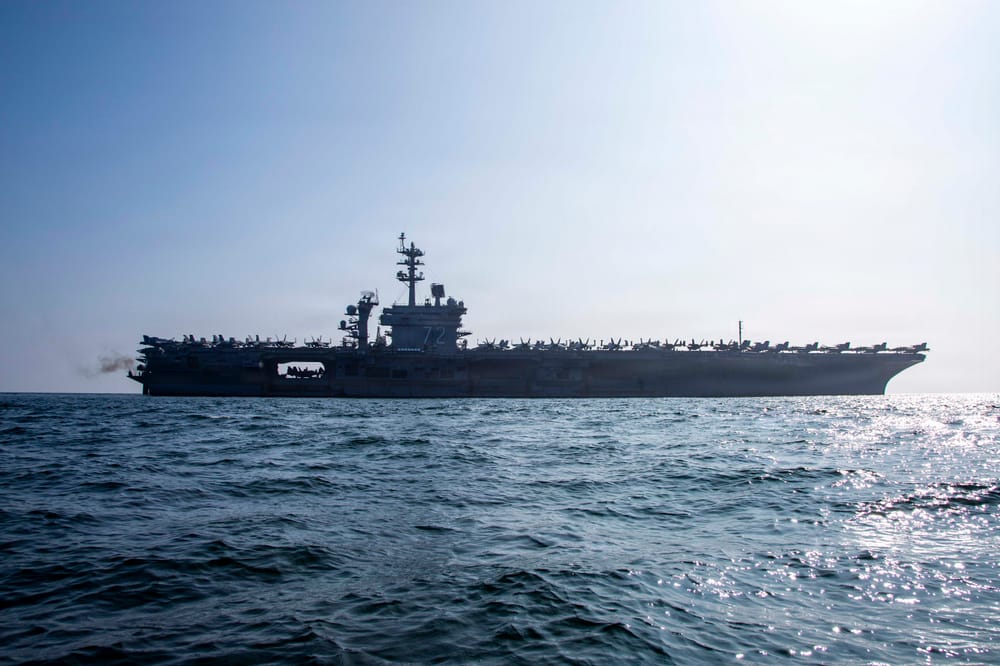
The June 2025 airstrikes on Iran's nuclear facilities were, by the administration's own account, among the most consequential military operations in recent American history. More than 125 aircraft participated, including B-2 stealth bombers, and the assault targeted three key sites: Fordo, Natanz, and Isfahan. In his televised address on the night of the strikes, Trump told the nation that the operation was "a spectacular military success" and that Iran's enrichment facilities had been "completely and totally obliterated." That claim, once asserted with conviction, is now proving to be a significant liability.
The Intelligence Diverged From the Rhetoric Almost Immediately
Within days of the June 21 strikes, a classified early assessment produced by the Defense Intelligence Agency told a different story. That assessment, which multiple news organizations reported contemporaneously, concluded that the strikes had not destroyed the core components of Iran's nuclear program and had likely set it back by only a few months. The status of Iran's stockpile of highly enriched uranium at Fordo was described as uncertain, with one source indicating that some material may have been relocated before the bombs fell. Centrifuges at certain sites were described as largely intact.
The Pentagon pushed back hard on those findings, calling the assessment preliminary and low-confidence. The White House called it a deliberate leak designed to undermine the president. A subsequent July 2025 Pentagon assessment offered a more favorable picture, estimating the program had been set back roughly one to two years. The CIA, for its part, issued a statement citing "a historically reliable and accurate source" suggesting that several key facilities were destroyed and would require years to rebuild. The net result was a muddled intelligence picture, contested across agencies and interpreted through partisan lenses, that never resolved cleanly in either direction.
Trump Repeated the "Obliterated" Claim More Than a Dozen Times
Rather than acknowledge the ambiguity, Trump doubled and tripled down on his original formulation. Between June and February, he used some variant of "obliterate" to describe the outcome of the strikes at least a dozen times in public statements and social media posts. In July he said the strikes "knocked out their entire potential nuclear capacity." By October he stated flatly that Iran did not have a nuclear program at all. As recently as February 13 of this year, he described the operation as "achieving total obliteration of the Iran nuclear potential capability." That was eleven days before his own special envoy suggested Iran was on the verge of bomb-making capability.
The word "obliterate" does not leave room for a comeback. In common usage and in strategic communication, it means total destruction without meaningful residue. Applying it to a nuclear program implies not just damage to buildings but the elimination of enriched material, centrifuge capacity, and the institutional knowledge that powers a weapons effort. If that claim were accurate, the framing now being offered by senior administration officials would require a near-miraculous recovery in under a year, a scenario that most independent analysts consider implausible.
The Witkoff Warning and What It Implies
The sharpest statement of current danger came from the president's special envoy, who told Fox News over the weekend that Iran was enriching uranium "well beyond the number that you need for civil nuclear" and had reached 60% purity. He added that Tehran was "probably a week away from having industrial-grade bomb-making material." That is an extraordinarily urgent framing, and if accurate, it implies one of two things: either the June strikes failed far more comprehensively than the administration acknowledged, or Iran rebuilt its capabilities at a pace that would be remarkable even under peacetime conditions. The International Atomic Energy Agency had reported in May 2025, before the strikes, that Iran's stockpile of uranium enriched to 60% purity had surpassed 408 kilograms, enough for multiple weapons if further enriched. The head of the IAEA said in a February 2026 interview that he believed much of that stockpile likely remained at the bombed sites.
The administration has not publicly reconciled these two positions. When the White House press secretary was asked directly last week why the United States might need to strike again given that the nuclear program was supposedly obliterated, she responded that there were "many reasons and arguments that one could make for a strike against Iran." That non-answer left the logical gap intact and in public view.
The contradiction over Iran's nuclear status is not an isolated communication failure. It reflects a broader pattern in which military action has been preceded by rationales that shift depending on the political moment. The stated reasons for considering a new strike have themselves migrated within weeks. In January, the primary public framing centered on Tehran's crackdown on protesters. By late February, the focus had moved almost entirely to the nuclear threat. That shift does not necessarily indicate bad faith, but it does make it harder for allies, legislators, and the public to evaluate the necessity, legality, or proportionality of potential action.
The administration's approach to the original June strikes followed a similar pattern. The U.S. intelligence community had assessed in March 2025 that Iran was not building a nuclear weapon. Despite that, strikes were authorized roughly three months later, justified partly on concerns about enrichment levels and partly in coordination with an ongoing conflict between Israel and Iran. The Congressional notification sent after the strikes stated the operation was necessary to advance vital national interests and to assist in collective self-defense of Israel. Critics in Congress questioned whether the War Powers Resolution had been followed appropriately, though that debate did not impede the mission.
Strategic and Geopolitical Stakes of a Second Campaign
A second military campaign against Iran would carry substantially higher risks than the first. Tehran has already warned that any new attack would be met, in the foreign ministry's word, "ferociously." Iran's conventional military capacity was degraded during the June conflict, but its ability to threaten regional shipping through the Strait of Hormuz, through which roughly 27% of global oil trade flows, remains a live concern. Proxy networks across the region, though weakened, retain some operational capacity. A second strike, especially one aimed at whatever reconstituted enrichment infrastructure exists, would need to contend with dispersal, hardening, and the possibility that Iran would respond by abandoning restraint entirely and racing toward a weapon.
Allies and adversaries alike are watching how the United States navigates the gap between its declared success and its current stated urgency. The credibility cost of having asserted total obliteration, only to treat the same program as an imminent threat months later, extends beyond domestic politics. It complicates diplomatic outreach, weakens the evidentiary case for coalition support, and raises questions that partners in Europe and the Gulf will ask before lending any form of backing to a second operation. The administration is preparing to address some of these questions in the president's State of the Union address on Tuesday evening. Whether the speech offers a coherent strategic rationale or simply reasserts familiar claims remains to be seen. The record of the past eight months suggests the latter carries meaningful risk.
Written by Nick Ravenshade for NENC Media Group, original article and analysis.
Author

Nick Ravenshade, LL.B., covers geopolitics, financial markets, and international security through primary documents, official filings, and open-source intelligence. Founder and Editor-in-Chief of NENC Media Group and WarCommons.
Sign up for NENC Media Group newsletters.
Stay up to date with curated collection of our top stories.