Israel says troops “operating in southern Lebanon” in forward defence posture to protect northern communities

JERUSALEM — The Israeli military said on 3 March 2026 that soldiers were operating in southern Lebanon in a forward defense posture, positioning personnel at several points near the border to counter militia activity and to bolster security for northern Israeli communities.
For full background, see prior coverage at
 Nick Ravenshade
Positions, posture and official lines
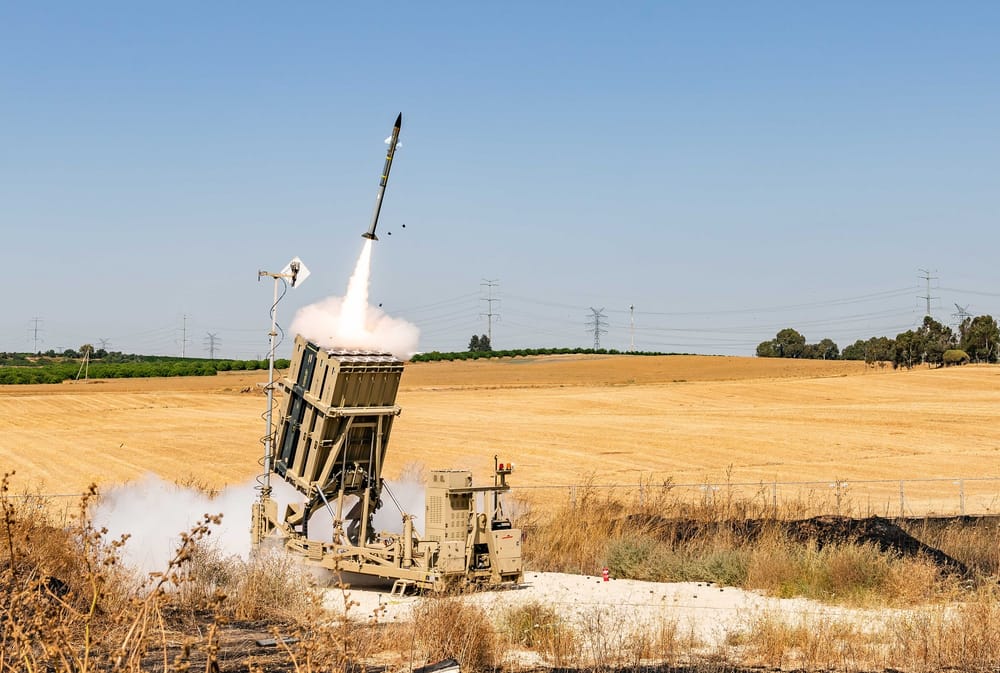
On 3 March 2026 the military described the deployment as a measured step to expand observation and interdiction capacity along the frontier. The announcement said personnel were placed at multiple vantage points to strengthen layered surveillance while air-defence systems and rapid-reaction detachments were reinforced that day. Officials framed the posture as defensive, stressing there were no immediate plans to evacuate civilian populations in adjacent towns.
The statement made on 3 March 2026 also clarified that the forward elements were supplementary to a continuing presence of forces at several sites inside southern Lebanon that have been maintained since a November 2024 ceasefire. The declared objective for that day was to prevent attacks on border communities while enabling precision operations against identified militant infrastructure. Command arrangements reported that day emphasised tighter coordination between observation posts and rapid-reaction units to reduce the risk of uncontrolled escalation.
Tactical and operational implications
Placing soldiers at forward observation posts on 3 March 2026 shortens reaction windows and improves the ability to interdict imminent threats, but it also raises operational and logistical demands. Forward elements require continuous resupply of fuel, ammunition and medical support, and their proximity to contact lines increases the vulnerability of convoys and staging areas to interdiction or indirect fire. Commanders therefore must synchronise ground patrols with aerial surveillance and electronic intelligence to manage the elevated risk of localised incidents.
Those operational trade-offs, evident on 3 March 2026, will influence whether the deployments remain a temporary buffer or evolve into sustained positions that need rotational forces and fixed supply lines. Use of unmanned aerial systems and signals intelligence is likely to intensify to limit exposure of small-footprint teams. Force planners will closely monitor how the presence of troops at close range affects adversary targeting behaviour, which in turn will inform any adjustments to rules of engagement and force posture.
Political, humanitarian and indicators to watch
The disclosure on 3 March 2026 is likely to attract international scrutiny over escalation management and civilian protections in border zones, and monitoring actors may press for clarified access protocols. The government’s public assurance that mass evacuation was not planned that day is a political signal intended to stabilise local sentiment, but it also creates expectations that authorities must meet to retain public trust. Failure to meet those expectations could provoke domestic pressure for clearer contingency plans or alternative protective measures.
Important indicators in the immediate 48-hour window include verified displacement figures, hospital admissions linked to hostilities, and disruptions to essential services in southern Lebanon and adjacent Israeli communities. Equally material are military logistics signals such as increased convoy frequencies, activation of reserve units, changes to checkpoint regimes and observable airlift operations; each will reveal whether the posture is a limited deterrent or the prelude to sustained activity. The 3 March 2026 announcement therefore shifts attention to both humanitarian metrics and operational footprints as near-term gauges of escalation risk.
For residents near the frontier the deployments announced on 3 March 2026 are a prompt to update household contingency plans, confirm sheltering arrangements and remain attentive to official communications. For commanders the move represents a deliberate choice to accept higher operational complexity in exchange for increased deterrent leverage; how incidents in proximity to civilian areas are managed in the coming hours will determine whether the posture stabilises or becomes a focal point for renewed confrontation. Immediate priorities identified that day included robust medical evacuation arrangements, clear public communications to reduce panic, and strict mechanisms for deconfliction with monitoring forces operating in the south.
Written by Nick Ravenshade for NENC Media Group, original article and analysis.
Author

Nick Ravenshade, LL.B., covers geopolitics, financial markets, and international security through primary documents, official filings, and open-source intelligence. Founder and Editor-in-Chief of NENC Media Group and WarCommons.
Sign up for NENC Now newsletters.
Stay up to date with curated collection of our top stories.