Israeli Strikes Hit Central Tehran Neighbourhood Housing Police Headquarters and State TV as Iran Confirms Khamenei's Death and Declares 40 Days of Mourning

DUBAI — A massive explosion tore through central Tehran on Sunday as the Israeli military announced it was targeting the "heart" of the city, sending a towering plume of smoke into the skyline and shaking the ground across a wide radius, in strikes the IDF described as a direct continuation of an operational sequence that began 24 hours earlier. The blast appeared centred on a neighbourhood housing Iran's police headquarters and the building complex of Iranian state television, two institutions representing the physical infrastructure of state power and public information control.
For full background, see prior coverage at:
 Nick Ravenshade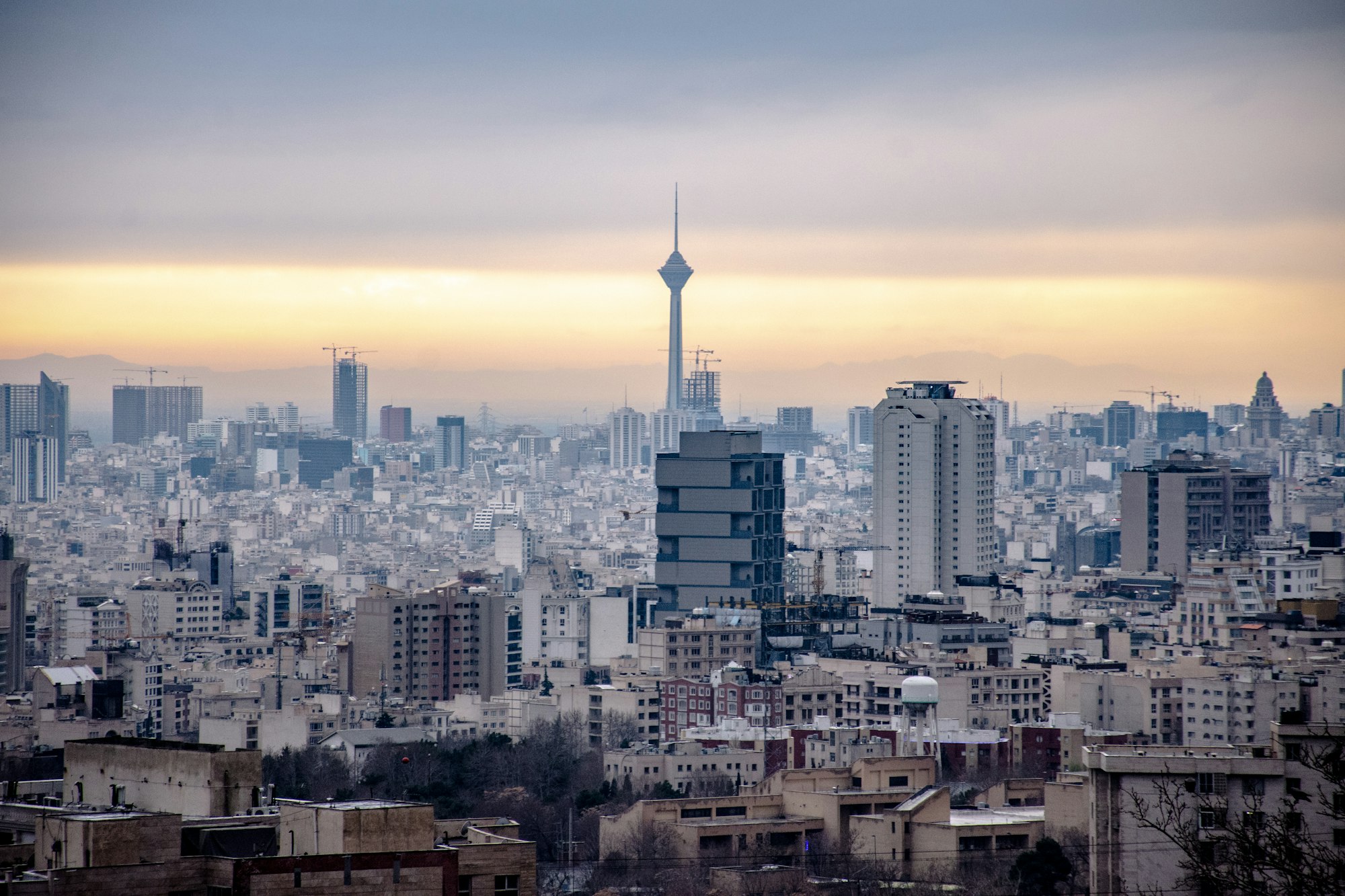
The IDF's "Day Two" Targeting Logic and What the Choice of Neighbourhood Signals
The Israeli military's framing of Sunday's strikes was deliberate and sequential in its stated logic. On the first day, IDF officials said, the operation was designed to clear air corridors to Tehran by degrading Iran's air defence and radar architecture. On the second day, with those corridors open, the military said it was now striking central Tehran directly. That two-phase framing transforms Sunday's explosion from an isolated event into a declared doctrinal escalation step, publicly announced before it was executed.
The selection of a neighbourhood containing both the national police headquarters and state television is not without strategic calculation. A police command centre represents the coercive domestic security apparatus. State television represents the information channel through which the Iranian government addresses its own population in a crisis. Striking infrastructure proximate to both simultaneously delivers a signal not only to the military chain of command but to the government's capacity to manage its own narrative domestically. It was not immediately confirmed, as of early Sunday, what specific buildings within the neighbourhood were struck or whether there were casualties.
Khamenei's Death Confirmed, Iran Declares 40 Days of Mourning
Iranian state television and IRNA formally announced the death of Supreme Leader Ayatollah Ali Khamenei in the early hours of Sunday, March 1, 2026, hours after U.S. President Donald Trump had announced the news on social media, calling Khamenei's death an opportunity for Iranians to "take back" their country. The IDF subsequently issued a formal statement confirming it had killed Khamenei in "a precise, large-scale operation carried out by the Israeli Air Force, guided by accurate IDF intelligence," while he was at his central leadership compound in Tehran. The confirmation from both sides ends any ambiguity about his fate and places the Islamic Republic in a succession crisis of a kind it has never previously faced during an active state of war.
The Iranian government declared 40 days of national mourning and a seven-day nationwide public holiday in Khamenei's memory. Mourners raised a black flag over the Imam Reza shrine in Mashhad, one of Shia Islam's most sacred sites in Iran. At the same time, eyewitnesses in Tehran told the Associated Press that other residents were openly celebrating in the streets, cheering from rooftops and sounding whistles, a duality that illustrates the profound and unresolved political divisions the strikes have surfaced within Iranian society. The semiofficial Fars news agency, citing unidentified sources, reported that several of Khamenei's relatives were also killed, including a daughter, son-in-law, daughter-in-law, and grandchild.
Iran's Retaliation Posture and the State's Institutional Response
Iran's political and military institutions moved rapidly to signal continuity of the state despite the leadership vacuum. Iran's Cabinet issued a formal statement vowing that the killing of Khamenei was "a great crime" that "will never go unanswered." Parliamentary Speaker Mohammad Bagher Qalibaf delivered a nationally televised address condemning the United States and Israel in the starkest terms yet issued by a sitting Iranian official, warning that Iran would "deliver such devastating blows that you yourselves will be driven to beg." The IRGC separately threatened to launch what it called its "most intense offensive operation" ever, directed at Israeli and American military installations across the region.
President Trump responded directly on social media, issuing an all-capitals warning that any Iranian retaliation would be met with force "never seen before." The exchange of public ultimatums between a sitting U.S. president and the remnant institutional structures of Iran's government, occurring simultaneously with live strikes on Tehran, illustrates how completely the diplomatic architecture of this crisis has collapsed. The National Security Council in Tehran urged residents of the capital to leave if possible, while simultaneously calling for calm, a combination that reflects the state's difficulty in balancing governance continuity against an active military threat to the city's urban core. As of early March 1, the target of Sunday's massive central Tehran explosion had not been confirmed by either the IDF or Iranian authorities, leaving the full scope of the day's second-phase strikes an open and rapidly developing question.
Written by Nick Ravenshade for NENC Media Group, original article and analysis.
Author

Nick Ravenshade, LL.B., covers geopolitics, financial markets, and international security through primary documents, official filings, and open-source intelligence. Founder and Editor-in-Chief of NENC Media Group and WarCommons.
Sign up for NENC Now newsletters.
Stay up to date with curated collection of our top stories.