Minneapolis immigration arrest turns violent as federal officer shoots man in leg, sparking fresh protests
MINNEAPOLIS — A federal immigration enforcement operation in Minneapolis escalated into a violent confrontation on Wednesday evening, ending with a man from Venezuela shot in the leg and renewed clashes between federal officers and protesters in a city already on edge over recent use of force. Officials said the man, who they allege is in the United States without legal status, was wounded after a struggle in which an officer was attacked with a shovel and broom handle during an attempted arrest. Authorities reported that the wounded man and the officer were taken to hospital, with the man’s injuries described as non‑life‑threatening and the two other people involved taken into custody.
Sequence of the confrontation
According to official accounts, the incident began during what was described as a targeted traffic stop shortly before 7 p.m. local time in a residential area of north Minneapolis involving a vehicle driven by a Venezuelan national. Officials said the driver fled the initial stop by driving away, colliding with a parked car before abandoning the vehicle and attempting to escape on foot through the neighborhood. A pursuing officer caught up with the man, and authorities allege that when the officer tried to apprehend him, the man resisted and began to physically assault the officer, triggering a struggle in close quarters.
During that confrontation, two additional individuals emerged from a nearby apartment building and joined the altercation with the officer, according to the official narrative. Officials said the pair used a snow shovel and a broom handle to strike the officer, while the initial subject broke free and allegedly joined in the attack using one of the improvised weapons. Authorities stated that, at that point, the officer fired what they characterized as defensive shots, striking the original subject in the leg before the three individuals retreated into the apartment building and barricaded themselves inside.
Barricade, hospitalizations and arrests
Officials said the three people remained inside the residence for a period of time after the shooting, though they did not specify the exact duration of the barricade. Federal agents ultimately made entry into the building, removed the wounded man and escorted him to an ambulance for transport to a local hospital. Authorities reported that the officer injured in the confrontation was also hospitalized, though they did not release detailed information about the nature of the officer’s injuries beyond describing them as non‑life‑threatening.
The two other individuals alleged to have attacked the officer were taken into custody at the scene, according to official statements. As of 15 January 2026, authorities had not publicly announced criminal charges arising from the incident, leaving open questions about how prosecutors will categorize the use of force by both the officer and the civilians involved. Officials have said that investigative agencies are reviewing the circumstances of the shooting, but detailed timelines for findings or any potential internal discipline have not yet been released.
City on edge after earlier fatal shooting
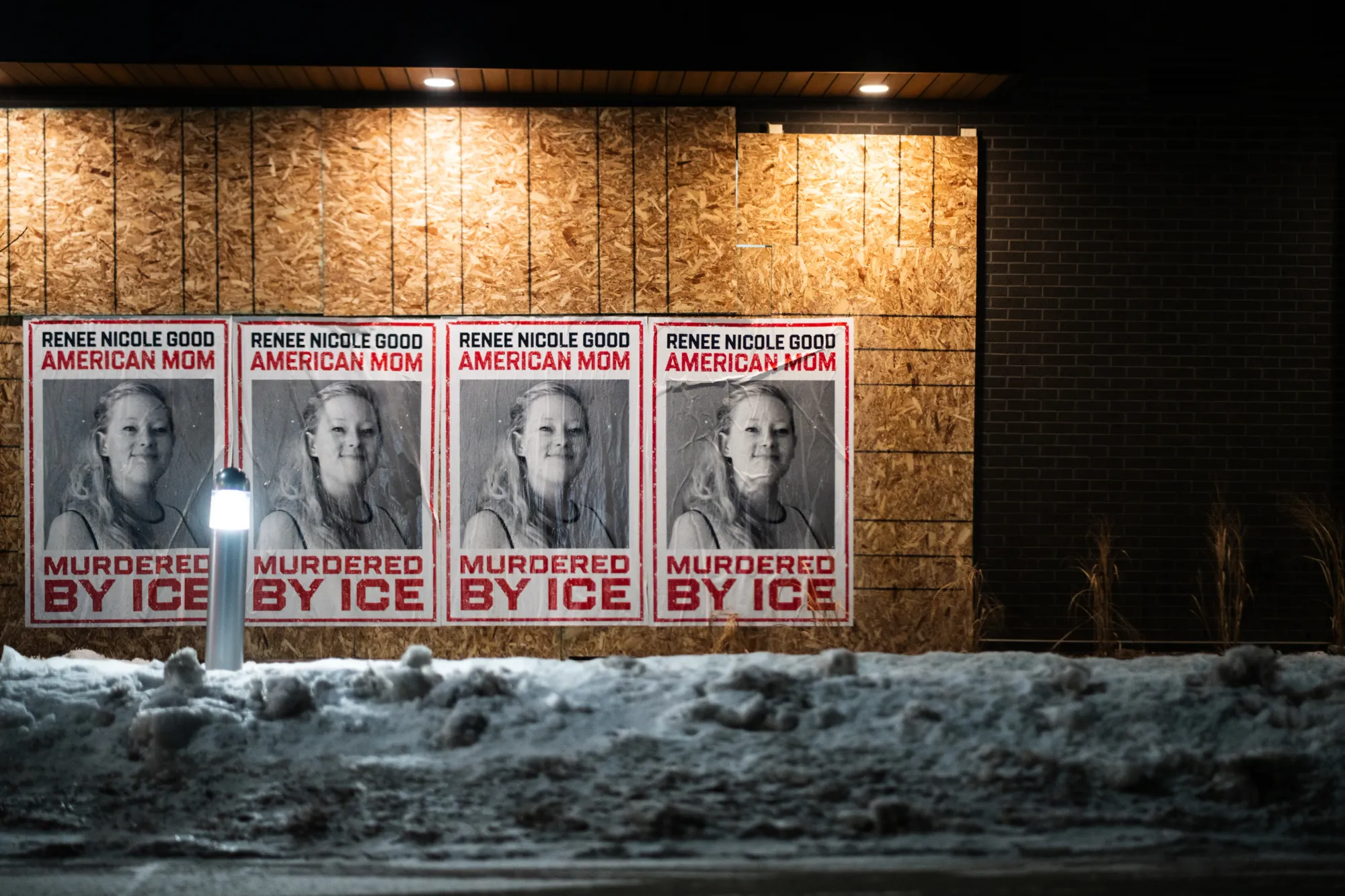
The incident occurred less than a week after a separate fatal shooting by an immigration enforcement officer in south Minneapolis, in which a U.S. citizen was killed during an encounter that prompted widespread protests and strong criticism of federal authorities. That earlier case, which remains under investigation, has intensified local scrutiny of immigration operations and hardened public sentiment in neighborhoods that have long expressed distrust of federal law enforcement activities. In that context, Wednesday’s non‑fatal shooting quickly became a focal point for frustration, with community members questioning why federal officers continue to conduct aggressive enforcement actions in densely populated urban areas after a deadly incident.
Officials noted that the renewed encounter came amid a broader pattern of anti‑immigration‑enforcement demonstrations in Minneapolis and other U.S. cities, where protesters have called for significant curbs on federal operations in local communities. In Minneapolis, activists have repeatedly targeted locations associated with immigration detention and processing, leading to confrontations with law enforcement that have included property damage, arrests and the deployment of crowd‑control munitions in recent days. Combined with the latest shooting, this escalation has fed fears among residents and civic leaders that the line between routine enforcement and militarized policing in the city is becoming increasingly blurred.
Protest response and local political fallout
In the hours following the shooting, crowds gathered near the scene and in other parts of the city, where demonstrators voiced anger about the use of force and demanded that federal immigration agents leave Minneapolis. Local authorities used social media and public statements to urge residents to go home, emphasizing that the injured man’s condition did not appear life‑threatening and warning that further confrontations could lead to more arrests or injuries. City officials also reiterated earlier calls for calm that followed the fatal shooting the week before, acknowledging the intense emotions surrounding federal operations while insisting that protests remain peaceful and lawful.
At the same time, local leaders sharpened their criticism of federal immigration enforcement’s presence in the city, reflecting mounting tensions between municipal authorities and national agencies. Public statements from city officials included explicit requests that immigration officers depart Minneapolis and even leave the state entirely, positioning the city’s stance as one of open opposition to continued operations under current conditions. That posture raises the prospect of a deeper intergovernmental clash over jurisdiction and control, as immigration enforcement remains a federal responsibility even when local governments object to tactics or deployments on their streets.
National scrutiny of force in immigration operations
The Minneapolis incidents feed into a wider national debate over the way federal authorities execute immigration enforcement, particularly in urban centers with recent histories of high‑profile police violence. Research on law‑enforcement use of force has documented thousands of deaths and serious injuries in encounters with officers over the past two decades, highlighting persistent concerns about transparency, accountability and disparities in outcomes across communities. While the most visible controversies have involved local police agencies, critics argue that similar standards of reporting, independent review and public disclosure should apply to federal units engaged in arrests and surveillance within U.S. cities.
In response to past controversies, some jurisdictions and agencies have expanded requirements for body‑worn cameras, detailed incident reporting and independent investigations of shootings involving officers, though coverage remains uneven across federal components. Data from recent academic work on police‑related shootings suggest that non‑fatal incidents, like the Minneapolis leg wound, often receive less sustained scrutiny than fatal cases, even though they may follow similar patterns of escalation and carry lasting physical and psychological impacts. The latest Minneapolis shooting is likely to intensify calls from civil‑rights advocates and policy analysts for more comprehensive public data and standardized review processes for all uses of force by immigration enforcement officers.
Legal questions and next investigative steps
As of 15 January 2026, officials had not publicly disclosed the name of the officer who fired the shots or the identities of the individuals involved in the confrontation, citing ongoing investigative processes and privacy considerations. Standard investigative practice in such cases typically involves interviews with the officer, witnesses and the individuals taken into custody, as well as collection of physical evidence, potential surveillance footage and any available recordings from nearby devices. The outcome of those inquiries will shape decisions about whether the officer’s actions are deemed consistent with policy, whether administrative sanctions are warranted and whether prosecutors will bring criminal charges against any party.
Legal experts note that the description of the shooting as a defensive response to an alleged three‑person assault will be a central factor in any assessment of reasonableness, particularly if additional evidence emerges that confirms or contradicts the official account of how the struggle unfolded. The presence or absence of independent video could prove decisive for public perception, especially in Minneapolis, where past cases have shown how footage can reshape narratives originally provided by authorities. Until more detailed findings are released, the incident adds to an already charged environment in which residents, federal agencies and local officials are contesting both the facts on the ground and the broader legitimacy of immigration enforcement practices in the city.
Written by Nick Ravenshade for NENC Media Group, original article and analysis.
Sources: CNN, NBC News, ABC News, Politico, Rolling Stone, CBS News Minnesota, Radio New Zealand, Gun Violence Archive‑based research (CrimRxiv), National Institutes of Health / PMC articles on police use of force, Annual Review of Criminology
Photo: “Renee Nicole Good, American Mom, Murdered By Ice” by Chad Davis, CC BY 4.0
Author

Nick Ravenshade, LL.B., covers geopolitics, financial markets, and international security through primary documents, official filings, and open-source intelligence. Founder and Editor-in-Chief of NENC Media Group and WarCommons.
Sign up for NENC Now newsletters.
Stay up to date with curated collection of our top stories.