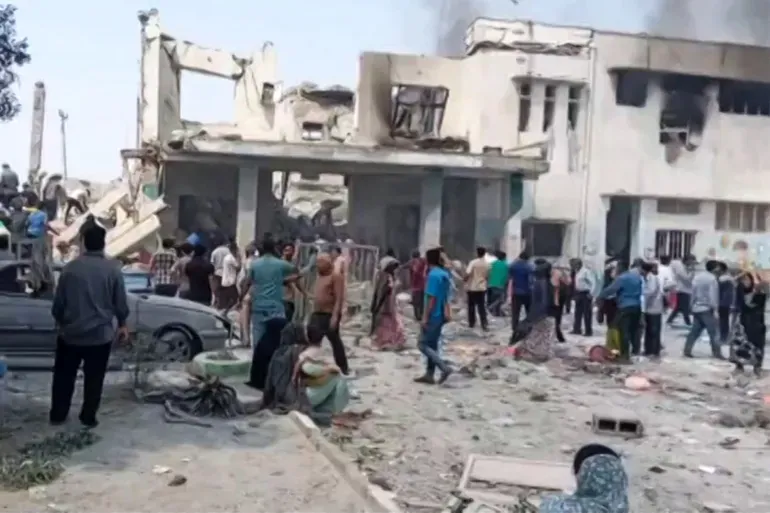
Russian forces appear poised to take full control of Pokrovsk after months of grinding combat that has turned the eastern Ukrainian city into one of the war’s most contested battlegrounds. The battle has become emblematic of the conflict’s attritional character with both sides committing significant resources to fight for a city whose strategic value is matched by its symbolic weight. Russian commanders have pressed advances into residential districts and municipal infrastructure while Ukrainian units continue fierce resistance in street by street fighting that has inflicted heavy casualties and civilian suffering.
Intense urban combat has marked the latest phase of operations as Russian troops exploit gaps in Ukrainian defensive lines and press attempts to encircle remaining defenders. Witness accounts and open source imagery indicate that fighting has become exceptionally close quarters in several neighbourhoods where the two armies now contest the same buildings. Russian forces have claimed advances into key parts of the city while Ukrainian commanders describe efforts to hold choke points and keep supply corridors open. The result is a battle of attrition that has both tactical and narrative implications for the wider campaign in Donetsk region.
Why Pokrovsk matters strategically and symbolically
The city sits on a transport and logistics axis that has long been important for movement of personnel and materiel in the Donetsk theatre. Controlling Pokrovsk would offer Russian forces logistical depth and operational flexibility across approaches to other contested localities, while denying Ukrainian units a staging area that has enabled manoeuvre and resupply. Military analysts have argued that while the capture of Pokrovsk may not, by itself, decide the broader operational campaign, it would nonetheless simplify Russian lines and relieve pressure on forward units by shortening supply chains.
Beyond pure geography the symbolic resonance of Pokrovsk is substantial. For Moscow a visible victory in a protracted eastern fight would be used to demonstrate momentum after periods of high attrition and contested gains elsewhere. For Kyiv holding the city has been a point of resilience and morale; its loss would be a psychological blow that underscores the grinding trade off between local defence and the strategic allocation of reserves across multiple hotspots. That dynamic has informed both sides’ willingness to accept high costs to either secure or retain the urban terrain.
Human cost and civilian toll
Civilians have borne much of the human cost. Before the full‑scale invasion Pokrovsk had a population in the tens of thousands; months of bombardment, repeated air and artillery strikes and urban fighting have devastated residential districts and forced waves of evacuations. Local emergency services and humanitarian actors report damaged utilities and strained medical capacity as hospitals cope with mass casualty incidents and shortages of staff and supplies. The intensity of bombardment around critical infrastructure has raised fears of prolonged displacement and severe challenges to post conflict reconstruction even if the front stabilises after the capture of the city.
Reports from frontline medical and policing units indicate that casualty figures are substantial on both sides, with Russian forces sustaining high losses in assaults on fortified positions and Ukrainian defenders paying a heavy price defending built up areas. Civilian casualties and infrastructure damage add layers of complexity to any post capture scenario because stabilising a shattered urban centre requires not only security but rapid humanitarian relief, restoration of basic services and credible guarantees of safety for returnees. Those needs will test the capacity of international aid agencies and place additional political pressure on Kyiv and its partners if Pokrovsk falls.
Military implications and likely next phases
If Russian forces complete their takeover, the immediate tactical effect would be to solidify Moscow’s control over a wider swathe of Donetsk and to free up formations to pursue operations elsewhere along the front. Analysts anticipate Russia will try to convert any territorial gains into deeper operational advantage by pressing on adjacent positions while attempting to secure supply lines against counterattacks. Ukrainian command faces difficult trade offs: committing reserves to retake Pokrovsk risks weakening defences in neighbouring sectors, while ceding the city could force a recalibration of defensive depth and corridor security in the Donetsk theatre.
Both sides have shown an ability to absorb enormous attritional costs, which suggests that even after a capture the frontlines may remain fluid and contested. Urban fighting leaves behind complex terrain that favours defenders in subsequent operations; occupying forces must clear areas block by block and secure logistics against partisan attacks and drone strikes. The long term operational picture will therefore hinge not only on who holds Pokrovsk but on follow up actions and the resilience of supply, artillery support and air denial capabilities on both sides.
International and diplomatic reverberations
The capture of Pokrovsk would resonate beyond the immediate battlefield by shaping political narratives in capitals and affecting the calculus of external supporters. For Kyiv it would be another costly territorial concession that could influence political debates over force posture, resource prioritisation and the timing of counteroffensive plans. For Moscow a touted victory could be used to bolster domestic messaging about the campaign’s progress and to reinforce diplomatic leverage. Western governments and partners will assess whether a change in control alters their force provision choices or recalibrates sanctions and diplomatic approaches aimed at sustaining Ukrainian resistance.
Humanitarian and reconstruction planning will also move up the agenda. If the city changes hands the international community will need to coordinate emergency relief while preparing for potential longer term stabilisation and rebuilding efforts. That work will be complicated by security constraints, clearance of unexploded ordnance and the need to negotiate access for aid convoys in contested or occupied territories. The scale of destruction visible in open source reporting suggests that reconstruction will require sustained funding and a comprehensive approach that pairs physical rebuilding with social and governance support for affected communities.
Pokrovsk has become a stark illustration of the war’s grinding logic: local gains exact high human and material costs, and symbolic victories can mask the operational complexity of holding and exploiting urban terrain. If Russian forces indeed secure the city, they will claim a politically potent prize while also inheriting the burdens of occupation, repair and continual security operations. For Ukraine the loss would be a painful reminder of the trade offs inherent in an asymmetric contest of endurance. As fighting continues the imperative for robust humanitarian access and for clear planning for any post capture scenario grows ever more urgent.
Written by Nick Ravenshade for NENC Media Group, original article and analysis.
Sources: Firstpost, ABC News, Yahoo News, AU News Yahoo, Ukrinform, DW, RFE RL, Meduza, Reuters, UKRINFORM.
Photo: Michał Franczak / Unsplash
Author

Nick Ravenshade, LL.B., covers geopolitics, financial markets, and international security through primary documents, official filings, and open-source intelligence. Founder and Editor-in-Chief of NENC Media Group and WarCommons.
Sign up for NENC Now newsletters.
Stay up to date with curated collection of our top stories.