Trump Weighs Iran Strike Decision as Largest US Military Force Since 2003 Assembles in the Persian Gulf
WASHINGTON — Senior national security officials have informed President Donald Trump that the United States military is ready to strike Iran as early as this weekend, though Trump has yet to authorize any action, according to multiple officials familiar with the discussions. The conversations, described as fluid and ongoing, reflect a White House carefully weighing the risks of a potentially weeks-long military campaign against the political and strategic costs of extended diplomatic failure. No final decision had been reached as of 19 February 2026, with officials cautioning that the timeline for any action is likely to extend beyond the coming weekend.
A Military Buildup of Historic Scale
The scale of the American deployment in and around the Persian Gulf is without precedent in recent decades. The current American air force presence in the Middle East is the largest since the 2003 invasion of Iraq, a benchmark that underscores both the size and the strategic intent behind the buildup. More than 150 military cargo flights have transported weapons systems and ammunition to the region in recent weeks. In just the 24-hour window spanning 17 to 18 February, an additional 50 fighter jets, including F-35s, F-22s, and F-16s, were repositioned closer to the theater of operations.
Two carrier strike groups anchor the naval component of the deployment. The USS Abraham Lincoln, a nuclear-powered aircraft carrier accompanied by guided-missile destroyers, cruisers, and a full complement of strike aircraft, has been operating in the Arabian Sea since late January. The USS Gerald R. Ford, described as the most advanced carrier group in the American arsenal, was en route to the Middle East as of Wednesday, last tracked off the coast of West Africa according to maritime vessel data, with its arrival expected as early as this weekend. Full forces are expected to be in place by mid-March, according to officials familiar with the planning timeline.
Air assets have been repositioned across multiple bases throughout the region. Fighter jets and refueling tankers based in the United Kingdom have been moved significantly closer to the Middle East, while F-15E aircraft relocated from RAF Lakenheath have been staged at Muwaffaq Salti Air Base in Jordan. Additional air defense systems, including Patriot missile batteries and Terminal High Altitude Area Defense units, have also been deployed. Several military units that had been scheduled to rotate out of the region in the coming weeks have had their deployment orders extended.
Diplomacy Without Resolution
Even as the military buildup accelerated, American and Iranian negotiators held indirect talks in Geneva on Tuesday, exchanging notes through intermediaries for three and a half hours without reaching any clear resolution. Trump's special envoy and his son-in-law briefed the president on the outcome of the Geneva session the following day, alongside a separate White House Situation Room discussion among senior national security officials. Both sides described the talks as making some progress, but American officials expressed limited optimism about closing the substantial gaps that separate the two positions.
The core disputes remain structurally deep. Washington is demanding that Iran forgo uranium enrichment on its soil entirely and has sought to broaden the negotiating agenda to include Tehran's ballistic missile stockpile, a demand Tehran has rejected outright. Iran insists its nuclear program serves exclusively peaceful purposes, says it will discuss limits only in exchange for the lifting of sanctions, has declined to accept a zero-enrichment standard, and has ruled out any talks on its missile capabilities. Iran's foreign minister said the sides had agreed on "guiding principles" for a potential deal, while the American vice president said Tehran had yet to acknowledge all of Washington's stated conditions.
White House officials maintained publicly that diplomacy remained the president's first preference while making clear the administration was not taking force off the table. The press secretary said Wednesday that there were "many reasons and arguments" for a strike against Iran but that diplomacy was always the president's first option. She also noted, without specifying consequences, that Iran had "a couple of weeks" to return with a meaningful response. The administration has not sought authorization from Congress for any military action, and public debate about what could become the most consequential American military intervention in the Middle East in at least a decade has been notably limited.
Iran's Countermoves and Military Posture
Tehran has responded to the mounting pressure with a series of moves designed to project resolve and complicate the calculus for any potential strike. Satellite imagery and analysis from an international security research organization have revealed that Iran is reinforcing several nuclear facilities using concrete and large quantities of soil to bury key sites, a process that could significantly raise the difficulty of attacking underground infrastructure. The Islamic Revolutionary Guard Corps conducted military exercises in the Strait of Hormuz this week, characterizing them as preparation for potential security threats and a demonstration of Iran's capacity to defend its sovereign interests.
Iran also announced joint naval drills with Russia in the Sea of Oman, with a senior naval officer framing the exercises as conveying a message of peace while aimed at deterring unilateral regional action. Earlier in February, IRGC gunboats attempted to stop and board a US tanker in the Strait of Hormuz, and the IRGC subsequently announced it had seized two foreign oil tankers near Farsi Island in the Persian Gulf. Iran's armed forces chief of staff publicly warned that the country was fully prepared to deliver what he described as "vengeful blows" against American forces and their allies in the region.
Senior IRGC commanders issued direct cautions against miscalculation by Washington and Tel Aviv. Iran's Supreme Leader posted an AI-generated image on social media depicting the USS Gerald Ford submerged, with accompanying text acknowledging the carrier's threat while warning of Tehran's capacity to sink it. Iran's foreign minister characterized Trump as being "dragged into war by certain elements and parties," a framing that pointed implicitly toward Israeli influence over American decision-making, a charge the White House did not address directly.
The Diplomatic Calendar and Timing Pressures
A series of calendar considerations is shaping the potential window for any military action. The Winter Olympics conclude this Sunday, and some European officials said they did not anticipate any strike before the closing ceremony, citing the traditional diplomatic significance attached to the games. Ramadan began on Wednesday, and officials from US allies in the Middle East, who have lobbied Washington against military action out of concern for regional destabilization, warned that conducting strikes during the Muslim holy month would be interpreted as a sign of disrespect and complicate American relationships with Arab partners.
The president is also scheduled to deliver his State of the Union address on Tuesday, an event that aides have characterized as the opening of his midterm messaging on domestic priorities. It remained unclear as of 19 February whether any of these factors were influencing the president's deliberations. In a further indication of preparation, the Pentagon has been temporarily moving some military personnel out of the Middle East to Europe and back to the United States ahead of potential action and in anticipation of possible Iranian counterattacks should a strike be authorized.
The potential conflict carries consequences that extend well beyond the immediate military equation. Regional allies in the Gulf have lobbied Washington to extend the window for diplomacy, warning that military action risks igniting a wider conflict in an already volatile region. Arab states have been broadly unified in pushing against a strike, while Israel remains the only regional actor actively encouraging the United States to act. Reporting indicates Israeli officials are preparing for the possibility of military action within days, with planning that extends to a maximalist scenario targeting Iran's missile program alongside its nuclear infrastructure.
A military operation, if ordered, is expected to be a weeks-long campaign substantially larger in scope than the precision strikes conducted last June, when the United States joined Israeli operations targeting nuclear facilities at Fordow, Natanz, and Isfahan. The current buildup has raised expectations, among both allies and adversaries, that any new operation would be a sustained joint US-Israeli campaign with significant implications for regional energy markets, global oil supply chains, and the remaining years of the Trump presidency. Trump has hinted at a desire for regime change in Tehran and insisted Iran not obtain a nuclear weapon, but has not publicly defined what precise objectives any military campaign would be designed to achieve, leaving both allies and Congress without a clear framework for the action being contemplated.
Written by Nick Ravenshade for NENC Media Group, original article and analysis.
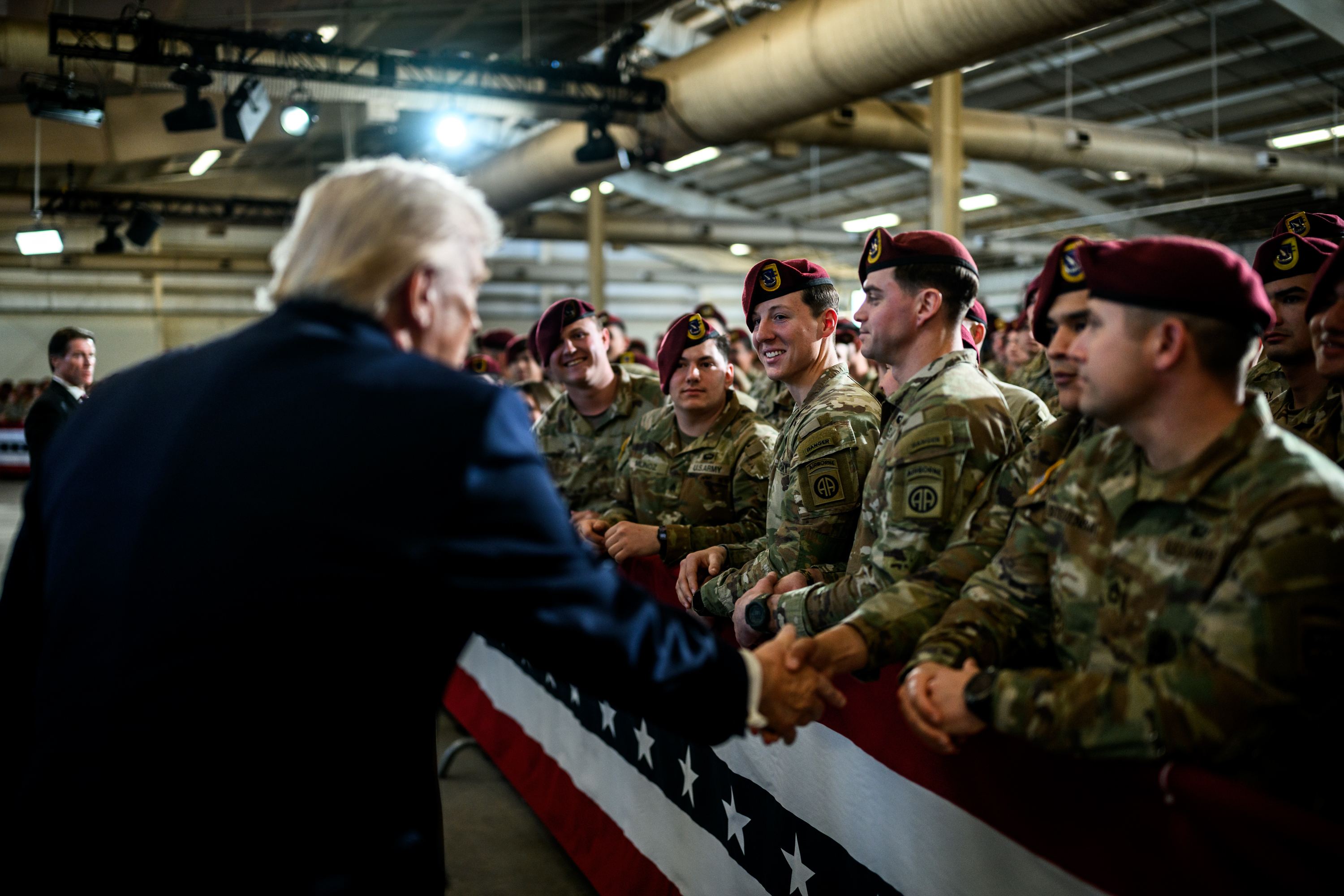
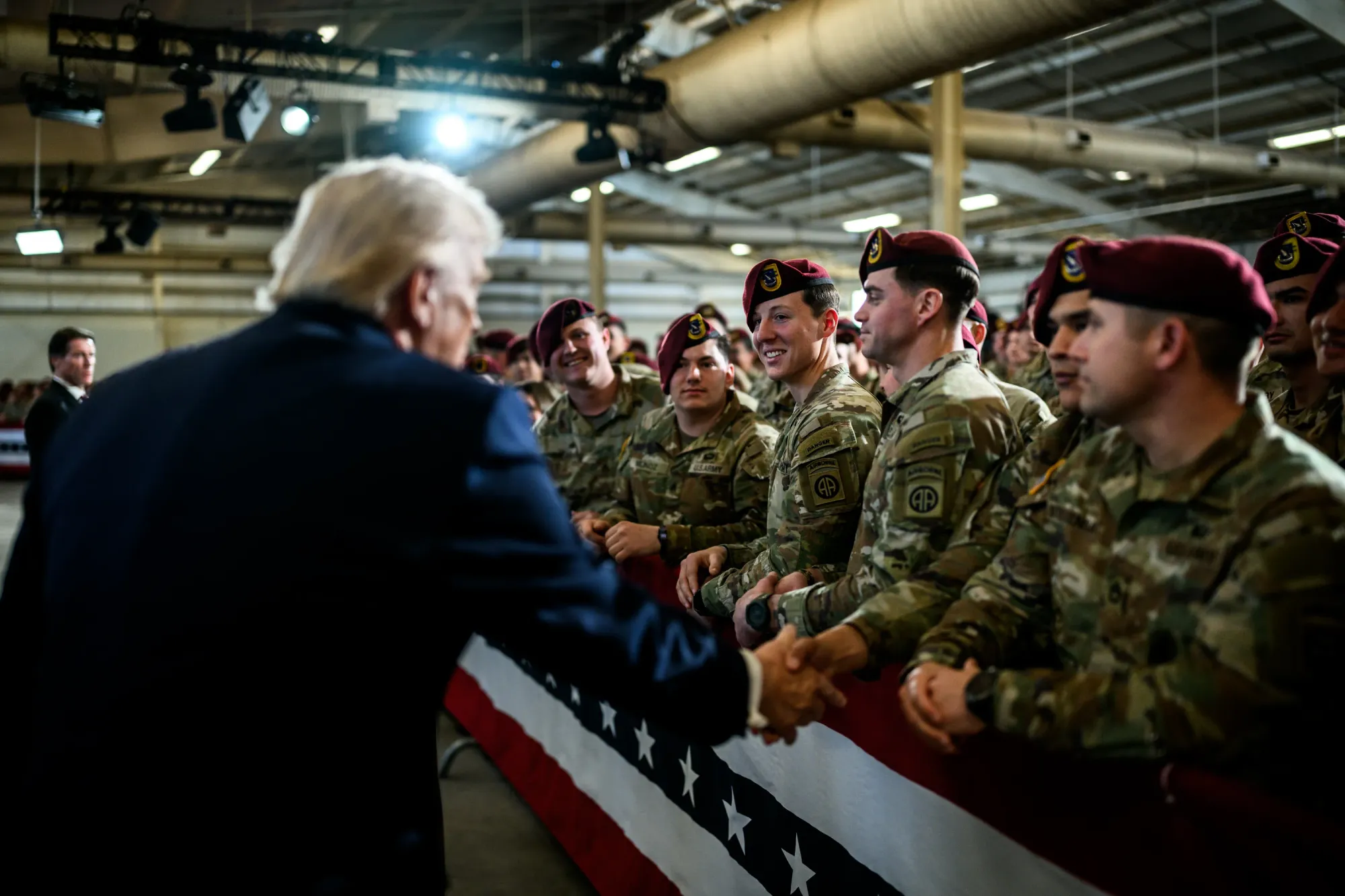
Photo: “Official White House photograph” / Source: The White House, https://www.whitehouse.gov/wp-content/uploads/2026/02/P20260212DT-0717.jpg, Retrieved 2026‑02‑12. No photographer credit listed; image provided as a United States Government work. Used with editorial attribution.
Author

Nick Ravenshade is Editor-in-Chief at NENC Media Group, overseeing global markets and finance coverage with a focus on transparency and independence. He previously covered financial regulation and geopolitics for local news media outlets.
Sign up for NENC Media Group newsletters.
Stay up to date with curated collection of our top stories.