Trump's 'Golden Age' Declaration Meets Economic Skepticism as Democrats Stage Historic State of the Union Walkout
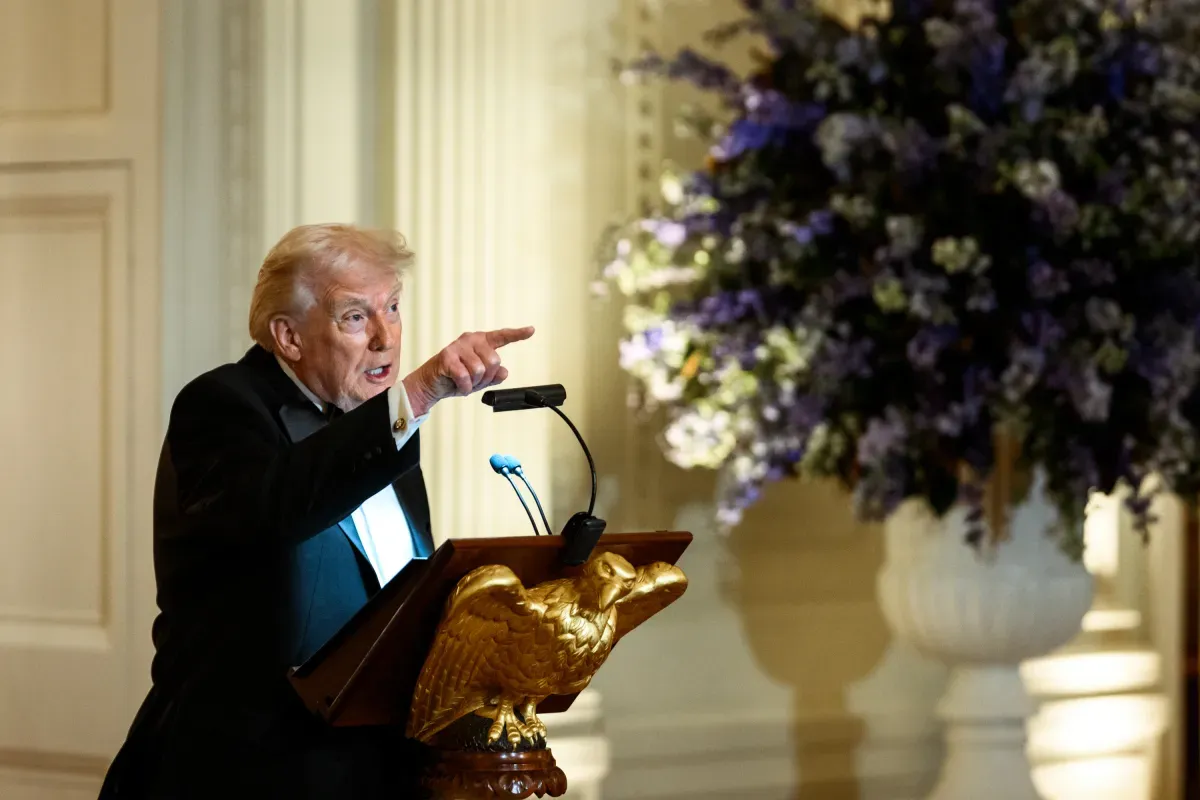
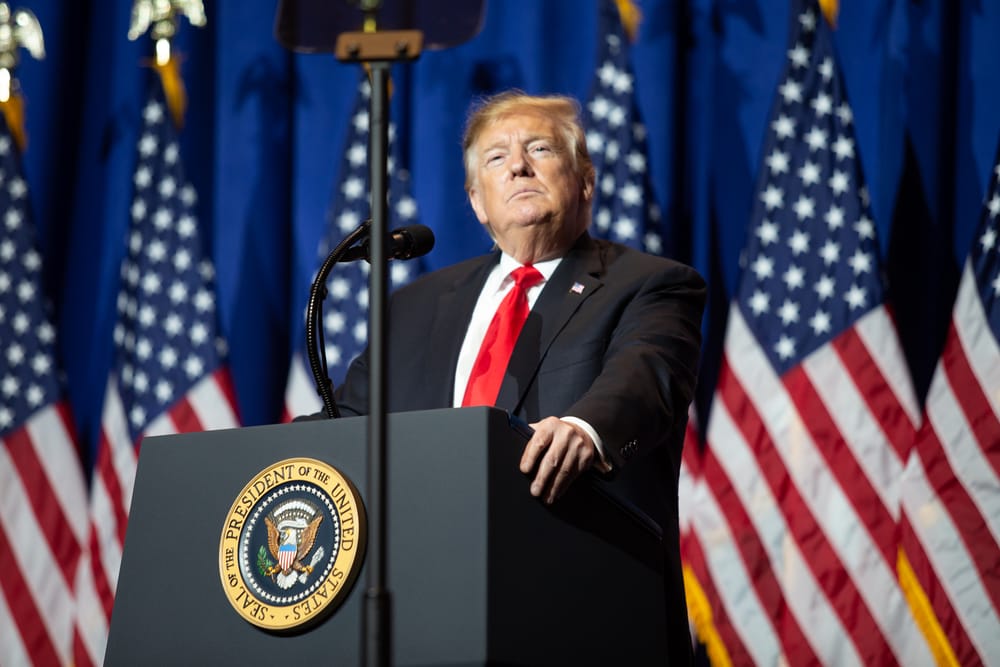
WASHINGTON — President Donald Trump delivered the longest State of the Union address on record Tuesday evening, speaking for one hour and 48 minutes before a joint session of Congress to proclaim that the United States had entered a "golden age," even as fresh polling data showed his approval rating at its lowest point since his return to office and voters expressed, for the first time in his political career, clear skepticism about his stewardship of the economy. The speech was defiant and largely unyielding in posture, offering no significant policy reversals and no overtures to the Democratic opposition, large portions of which had emptied the chamber in protest.
A Record-Length Address Framed in Historic Terms
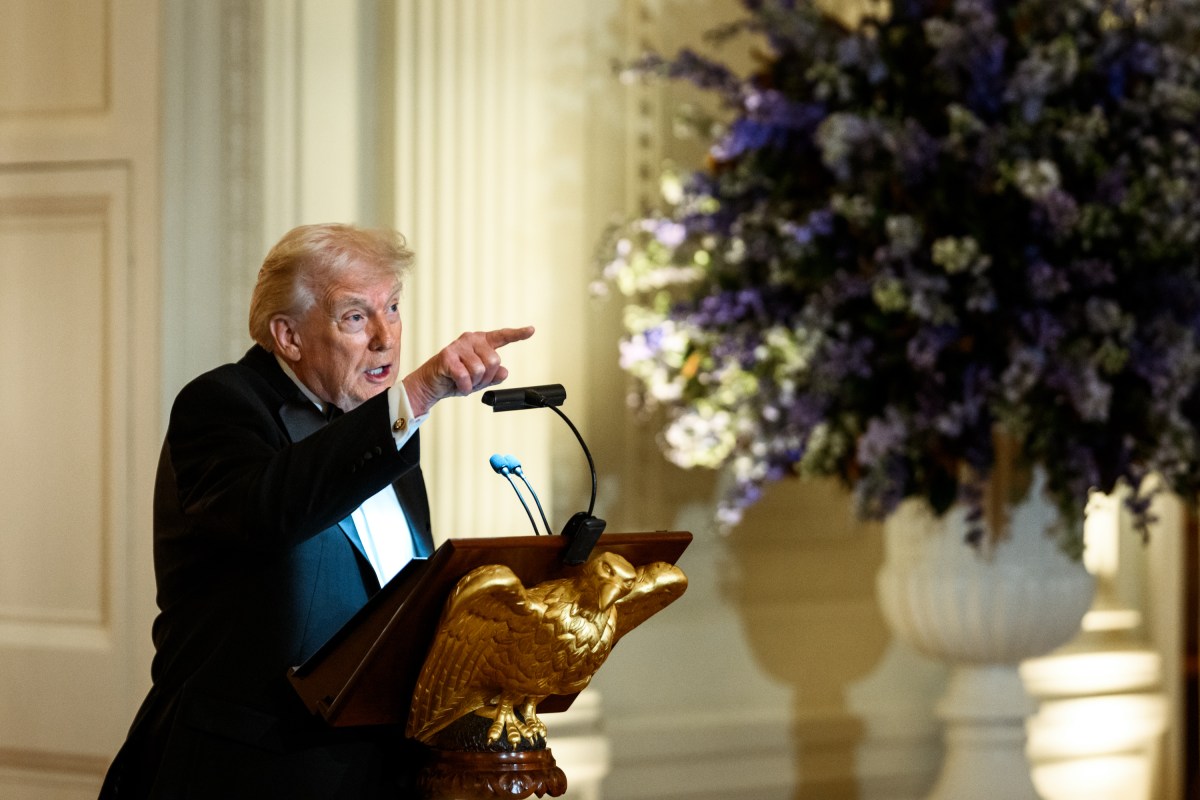
Trump opened by invoking the approaching 250th anniversary of American independence before declaring that his first year back in office had produced "a transformation like no one has ever seen before, and a turnaround for the ages." At one hour and 48 minutes, the address surpassed the previous modern record, set by Trump himself a year earlier at one hour and 40 minutes, and eclipsed President Bill Clinton's joint address from 2000 to become the longest on record in at least six decades, according to data maintained by The American Presidency Project at the University of California, Santa Barbara. Republicans leapt to their feet repeatedly throughout the evening, while Democrats who remained in the chamber sat largely in silence, their expressions ranging from stony neutrality to visible scorn.
The president catalogued what he called a sweeping array of first-year achievements: a border he described as "the most secure in American history by far," declining fentanyl flows, falling murder rates, rising incomes, and stock market milestones he claimed had arrived well ahead of schedule. He presented Medals of Honor to two individuals, including a 100-year-old Korean War veteran, and welcomed the gold-medal-winning United States men's hockey team from the 2026 Winter Games, which concluded just two days before the address, to a rare bipartisan ovation. Among new proposals, he called on Congress to pass the SAVE America Act, which would require voters to show photo identification and proof of citizenship at the polls.
Economic Optimism Against a Backdrop of Polling Erosion
The address arrived at a politically precarious moment on the economic front. A Washington Post-ABC News-Ipsos survey released the Sunday before the speech found 60 percent of respondents disapproving of the job Trump is doing, while a CNN poll conducted by SSRS placed his overall approval rating at 36 percent, down 11 points from the same period one year earlier. His approval rating on the economy specifically had fallen to 41 percent in the Post survey and 36 percent in the NPR-PBS-Marist poll, a decline of three to four percentage points from earlier readings. Approval of his handling of tariffs, a central pillar of his economic agenda, stood at just 34 percent in the Post survey.
Consumer price data illustrates the texture of that frustration. Egg prices fell roughly 48 percent between January 2025 and January 2026, according to Bureau of Labor Statistics figures, having peaked at approximately $6.23 per dozen in March 2025. Ground beef, by contrast, reached a record high of $6.75 per pound last month, per the same agency, underscoring the uneven relief that many households are actually experiencing. Unemployment stood at 4.3 percent in January, up from 4 percent when Trump took office a year ago. Job gains in January were concentrated in health care, a sector typically insulated from broader economic cycles, rather than in manufacturing or construction, where the administration's trade agenda had been expected to make its most visible mark.
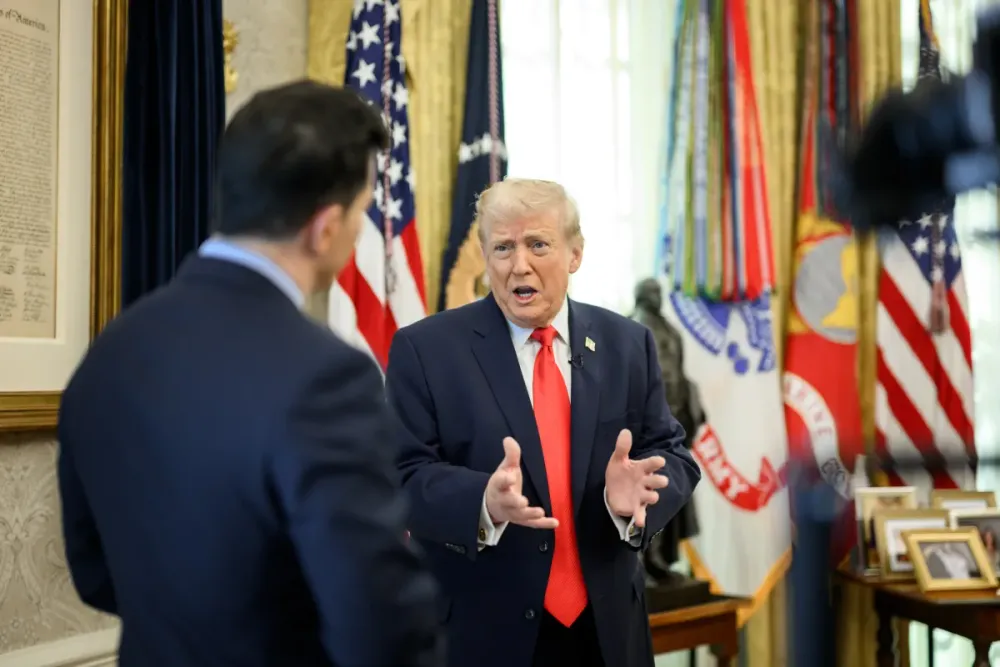
Trump defended his tariff strategy anyway, calling it essential to national security and economic sovereignty. The Supreme Court had ruled just four days before the address that he lacked the statutory authority to impose broad tariffs under the emergency powers framework his administration had used, a setback he acknowledged publicly as "disappointing." He pledged to levy replacement tariffs under an alternative legal authority and reiterated his long-standing ambition to eventually use tariff revenues to replace the federal income tax entirely, a proposition that economists across the political spectrum have called arithmetically infeasible at current and projected trade volumes.
Iran: Military Buildup, Deliberate Ambiguity
The speech arrived against a backdrop of significant regional tension. The administration had ordered what analysts described as the largest American military buildup in the Middle East since the 2003 invasion of Iraq, deploying two aircraft carriers and 14 surface warships to the region amid speculation that a military strike against Iran's nuclear program was under active consideration. Senate Democrats who received a classified briefing on the situation in the days before the address emerged warning publicly of potential escalation.
Yet Trump offered the American public almost no strategic clarity on Iran during the address itself. He asserted broadly that adversaries were "scared" and that the nation commanded respect "like never before," language consistent with his characteristic foreign policy rhetoric but devoid of operational specificity. He did not outline what conditions would trigger military action, what the goals of any strike would be, or what a post-action diplomatic framework might look like. What precise operational planning is underway remains unconfirmed in public government documents as of 25 February 2026. The omission was notable given that analysts and members of both parties had identified the address as an important opportunity to prepare public opinion ahead of a potentially consequential decision with major regional and global ramifications.
The Chamber Divided: Boycotts, Ejections, and Confrontation
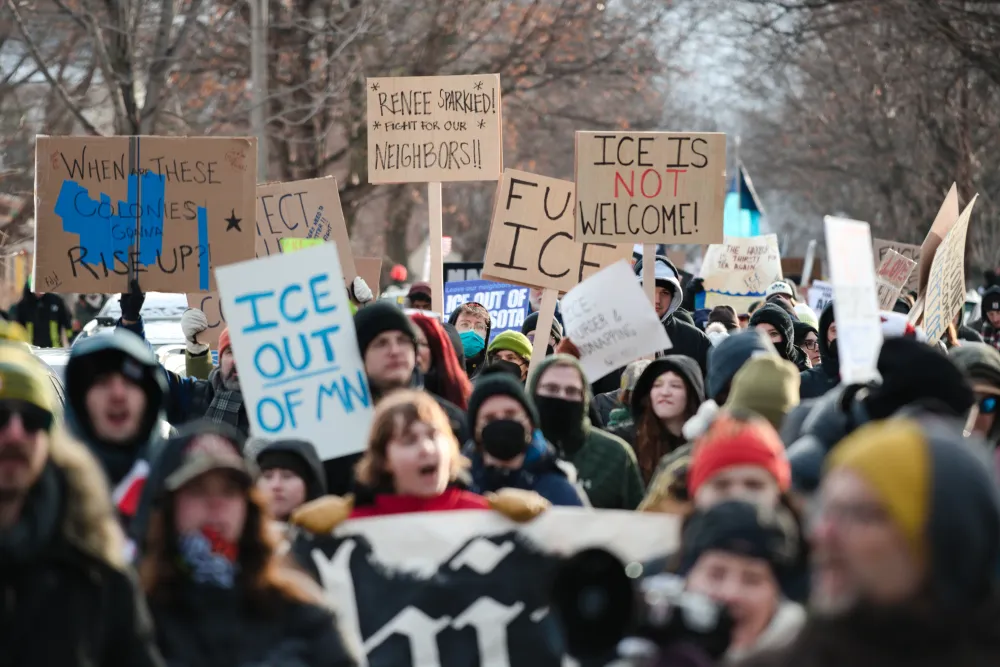
The political theater surrounding the address matched its policy content in intensity. Dozens of Democratic lawmakers boycotted the speech, staging a parallel "People's State of the Union" rally on Capitol grounds organized by progressive activists and elected officials who framed their absence as principled institutional protest. House Minority Leader Hakeem Jeffries had presented the choice to his caucus the prior week as one between "silent defiance" or nonattendance, deliberately steering away from the disruptive demonstrations that generated unflattering imagery in recent years. Senator John Fetterman of Pennsylvania, who attended despite the boycott, had urged colleagues beforehand to conduct themselves with "dignity" and avoid conduct he said made the party look amateurish.
Disruption came nonetheless. Representative Al Green of Texas was escorted from the floor near the start of the proceedings after holding a sign reading "Black people aren't apes," a reference to a video Trump had reposted on his social media platform depicting former President Barack Obama and Michelle Obama in dehumanizing terms. House Majority Leader Steve Scalise moved to remove the sign, and the Sergeant-at-Arms escorted Green from the chamber. Representatives Ilhan Omar of Minnesota and Rashida Tlaib of Michigan shouted at the president from their seats during his remarks on immigration. Representative Lauren Underwood of Illinois, one of several Democratic women wearing white as a tribute to the suffragist movement, departed quietly mid-speech. House Speaker Mike Johnson called the Democratic boycott "detestable" in a pre-speech interview, saying members had broken with a long tradition of attending regardless of which party held the White House.
The Democratic Counter-Message and the Midterm Stakes
Virginia Governor Abigail Spanberger delivered the official Democratic rebuttal, centering her remarks tightly on economic affordability and what she described as the administration's failure to make life less expensive for ordinary families. She posed three direct questions to viewers at home: whether the president was working to make their lives more affordable, keep Americans safe, and govern on their behalf. She charged that the administration's tariff policies had imposed more than $1,700 in additional costs on the average American family. Senator Alex Padilla of California delivered a parallel Spanish-language response, accusing the president of misrepresenting economic conditions and pursuing what he described as reckless immigration enforcement.
Both responses pointed to the strategic terrain that will define the November 2026 midterm elections, now less than nine months away. With midterms threatening to shift control of Congress, Trump's address functioned as an early and forceful statement of the Republican campaign message, built around immigration enforcement, projections of economic revival, and a posture of restored national strength. Democrats are wagering that voter dissatisfaction with the cost of living will prove durable enough to translate into competitive congressional races across key districts. The argument that played out inside the House chamber and on its surrounding grounds on Tuesday night will extend well beyond Washington, with consequences for which party controls the legislative agenda for the remainder of Trump's second term.
Written by Nick Ravenshade for NENC Media Group, original article and analysis.
Author

Nick Ravenshade, LL.B., covers geopolitics, financial markets, and international security through primary documents, official filings, and open-source intelligence. Founder and Editor-in-Chief of NENC Media Group and WarCommons.
Sign up for NENC Now newsletters.
Stay up to date with curated collection of our top stories.