Trump’s renewed Greenland push alarms Nordic leaders as ex-Iceland president warns of ‘monumental’ fallout

COPENHAGEN — A fresh escalation in United States rhetoric over Greenland’s strategic future has drawn sharp warnings from Nordic leaders, who say any attempt by Washington to force a change in the island’s status would trigger a political and legal crisis far beyond the Arctic. In comments that have reverberated across European capitals, a former Icelandic head of state cautioned that a hypothetical U.S. “seizure” of Greenland could produce consequences without precedent in modern transatlantic relations. His intervention comes as diplomats from Greenland, Denmark and the United States struggle to reconcile diverging security and sovereignty priorities, even as all sides formally acknowledge that the island remains part of the Kingdom of Denmark with a recognized right to self‑determination under international law.
High‑stakes talks with little progress
Recent high‑level meetings between senior representatives of Greenland, Denmark and the United States ended without a public breakthrough on the core question of how far Washington’s strategic ambitions can stretch without infringing on Greenland’s autonomy or Denmark’s sovereignty. Officials framed the talks as part of ongoing consultations over defense cooperation, economic ties and the future of U.S. military facilities on the island, but diplomats privately described wide gaps over the language around ownership and potential future status. While all parties reaffirmed that Greenland remains an autonomous territory within the Danish realm, the lack of a clear joint statement on sovereignty has fueled concern in Nordic policy circles that political signaling from Washington may be outpacing the legal and diplomatic framework.
The tension is sharpened by recent public comments from Donald Trump, who has returned to the Greenland issue after first floating the idea of acquiring the island during his earlier term in office. His sharpened rhetoric, which frames Greenland as critical to U.S. national security and competition with Russia and China, has been interpreted by some European observers as testing the limits of alliance norms within NATO. Danish and Greenlandic officials continue to insist that any decisions about the island’s future must emerge from democratic processes involving Greenland’s population and the Danish political system, not unilateral steps by a foreign power, underscoring how sensitive the subject has become for domestic audiences in both Copenhagen and Nuuk.
A legal status built on self‑government
The legal framework governing Greenland’s status rests on the Act on Greenland Self‑Government, which entered into force in 2009 and replaced an earlier home‑rule regime established in 1979. Under that act, Greenland exercises legislative and executive powers in areas it has assumed responsibility for, and it has gained control over key domains such as natural resources and certain aspects of external relations, while Denmark retains responsibility for foreign affairs, security and monetary policy unless transferred by agreement. Critically, the preamble to the act recognizes the people of Greenland as a people under international law with a right to self‑determination, anchoring the territory’s future status in both domestic legislation and broader international norms.
The same statute provides a clearly defined pathway to full independence, stating that if the people of Greenland decide in favor of independence, negotiations must begin between the Danish government and Greenland’s authorities, with any final agreement requiring approval by Greenland’s parliament, a referendum in Greenland and consent from the Danish parliament. This mechanism means that changes to Greenland’s status are legally tied to democratic consent within the kingdom, reducing the scope for external actors to alter sovereignty through pressure or unilateral action. Analysts note that while some Greenlandic politicians have advocated eventual independence, the island still relies heavily on an annual block grant from Denmark and remains economically constrained, factors that complicate timelines for any future shift to full statehood.
‘Monumental’ fallout and alliance strain
Against this legal backdrop, the warning from Iceland’s former president that a U.S. attempt to seize Greenland would trigger “fallout on a scale that we have never seen in living memory” reflects deep anxiety about the stability of Western alliances. Such a move would collide with the principles of self‑determination embedded in Greenland’s self‑government act and with broader post‑war norms that reject the acquisition of territory without the consent of its people. It would also test the cohesion of NATO, whose members are formally committed to collective defense but are not obligated to support unilateral territorial ambitions by an ally, particularly when those ambitions run counter to another member’s sovereignty.
Officials and legal scholars point out that any attempt to impose a new status on Greenland outside the negotiated pathway outlined in Danish law would likely provoke legal challenges in Danish courts and international forums, including potential appeals to the United Nations. Diplomatic fallout could extend well beyond Scandinavia, as states that have historically backed the rules‑based order might view such a move as eroding the very norms that underpin their own security guarantees. For the Arctic itself, a forced change in control could destabilize existing mechanisms of cooperation, including work within regional bodies that depend on consensus and mutual recognition of sovereignty to manage shared environmental and security concerns.
U.S. bases, treaties and the limits of power
The United States already maintains a long‑standing military presence in Greenland under defense agreements dating back to the early Cold War, most notably through its air base at Thule, now also known by its Greenlandic name Pituffik. Those arrangements, updated in 2004 and revisited in a 2025 framework agreement, define Thule as the only formal U.S. defense area on the island and require consultation and consent from both Danish and Greenlandic authorities before any major operational changes or new facilities can be introduced. In practice, this grants Washington significant operational reach in the Arctic while still binding its activities to written accords that affirm Denmark’s sovereignty and Greenland’s autonomous role.
The latest agreement between Copenhagen, Nuuk and Washington, announced in early 2025, links defense cooperation with economic benefits, including provisions that future maintenance contracts at the base should favor Greenlandic companies. This is intended to address long‑standing local concerns that strategic use of the island has not translated into sufficient direct economic gains for its population, even as Greenland’s geography underpins parts of U.S. early‑warning and missile‑tracking architectures. By enhancing Greenland’s say over how the base operates and who profits from its support services, the deal underscores that existing treaties can evolve without altering formal ownership, raising questions about why a territorial transfer would be necessary for Washington to pursue its stated security objectives.
Russia, China and an increasingly crowded Arctic
Supporters of a more assertive U.S. posture toward Greenland often frame their arguments in terms of countering Russia and China, whose Arctic strategies have expanded in scope and ambition over the past decade. Russia has upgraded its Arctic military infrastructure and adopted a long‑term strategy that emphasizes both security and economic development, seeking to control emerging shipping routes and exploit hydrocarbons and minerals exposed by melting ice. China, which describes itself as a “near‑Arctic state,” has increased its scientific research footprint, invested in polar technology and pursued port and resource projects in cooperation with Russia, although several proposed ventures in Nordic territories, including Greenland, have met political resistance.
Strategic documents and recent analyses suggest that Beijing sees participation in Arctic environmental governance and multilateral forums as a way to legitimize and embed its long‑term presence in the region, even as Western governments worry about dual‑use infrastructure and possible hybrid threats. Moscow and Beijing have also signaled closer alignment across multiple domains, with joint statements in 2025 dropping earlier language that stressed their relationship was “not an alliance,” a shift that alarms officials in capitals already unsettled by their cooperation in the High North. Yet experts caution that invoking these trends should not obscure the fact that any dramatic move by Washington against Greenland’s current status could itself destabilize the Arctic, inviting countermoves and undermining the cooperative mechanisms that currently help manage tensions among the major powers.
Greenland’s own uncertain path
Within Greenland, debates over independence, economic sustainability and relations with both Denmark and external partners have intensified since the introduction of self‑government. The island has gained greater control over domestic affairs and natural resources, but its economy continues to depend heavily on fisheries, a limited mining sector, tourism and the substantial annual block grant from Denmark, creating structural constraints on the timing and form of any future bid for sovereignty. Successive governments in Nuuk have explored opportunities to diversify, including through mining projects and closer economic links with partners such as the European Union and the United States, even as environmental and social concerns have slowed or halted several high‑profile ventures.
This complex picture means that Greenland’s political leaders must balance aspirations for eventual independence with the immediate need to secure stable revenue, protect fragile ecosystems and maintain public support for any major strategic choices. Analysts argue that external pressure over the island’s status risks hardening positions in both Greenland and Denmark, potentially complicating pragmatic cooperation on defense, climate adaptation and infrastructure that could otherwise benefit all sides. For now, the legal and political framework points toward gradual, negotiated evolution rather than abrupt change, but the renewed rhetorical battles surrounding Greenland highlight how vulnerable that path could become if major powers treat the island more as a prize than as a self‑governing community with its own voice.
Written by Nick Ravenshade for NENC Media Group, original article and analysis.
Sources: Danish Prime Minister’s Office, Government of Denmark, ETH Zürich, High North News, The Arctic Institute, MERICS, McGill‑Queen’s University Press review, FW‑Mag, Wikipedia
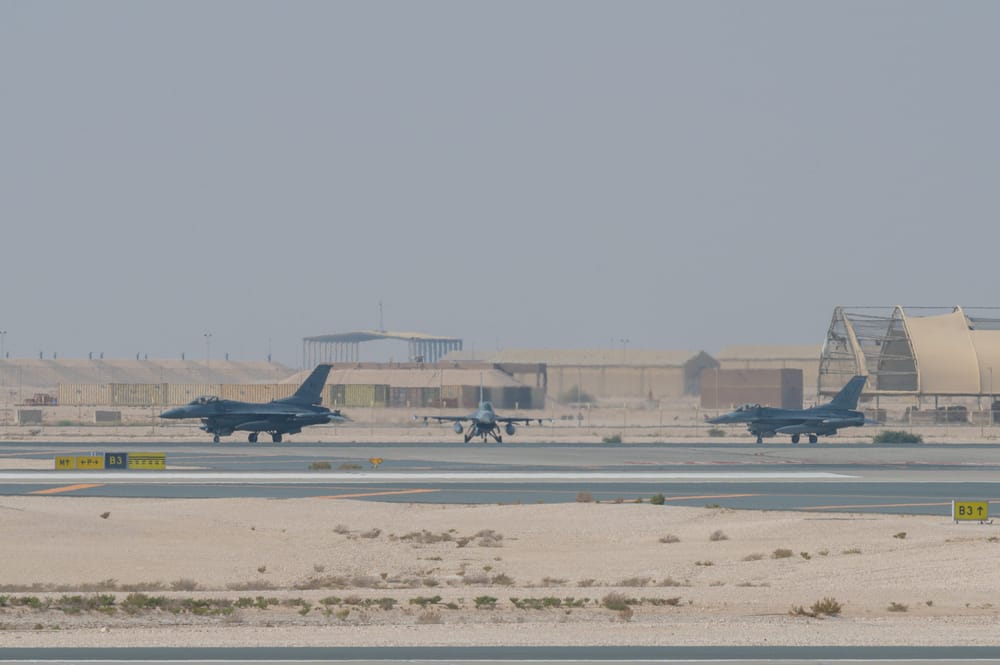
Photo: “Official White House photograph” / Source: The White House, https://www.whitehouse.gov/wp-content/uploads/2026/01/p20260103mr-0819_55022162726_o.jpg, Retrieved 2026‑01‑15. No photographer credit listed; image provided as a United States Government work. Used with editorial attribution.
Author

Nick Ravenshade, LL.B., covers geopolitics, financial markets, and international security through primary documents, official filings, and open-source intelligence. Founder and Editor-in-Chief of NENC Media Group and WarCommons.
Sign up for NENC Now newsletters.
Stay up to date with curated collection of our top stories.