A tentative thaw in U S China trade relations has begun to reshape market expectations and diplomatic signalling, even as fundamental strategic competition between the two powers remains unresolved. In recent weeks Washington and Beijing implemented a tranche of measures agreed in last month’s high level talks that roll back some of the most disruptive tariff threats and open limited channels for commerce. The move has calmed supply chain anxieties and lifted risk appetite in global markets, but analysts and officials caution that the detente is procedural rather than transformational and that deep geopolitical tensions continue to define the relationship.
The headline action involved a suspension of planned tariff escalations that had threatened to dramatically raise duties on bilateral trade. That decision, coupled with a sequence of working level technical accords to facilitate customs processing and to prioritise agricultural purchases, has offered immediate relief to multinational companies and retailers that rely on stable cross border flows ahead of the holiday season. Political leaders framed the session as pragmatic crisis management rather than a full scale rapprochement, and both sides emphasised that the arrangement is temporary and conditional on follow through.
Substantive gains alongside enduring frictions
Officials described the early effects as tangible. Logistics bottlenecks eased at key ports, buyers gained clarity on duties and importers gained breathing room to plan inventories and pricing for the crucial year end shopping period. For sectors such as electronics and apparel the pause in tariff escalation reduced the probability of abrupt margin compression and the need for last minute supply chain re engineering. Agricultural exporters also welcomed commitments that would restore predictable demand patterns for commodities that had been subject to abrupt swings during the trade dispute.
Yet the thaw has limits. Beijing has not dismantled export control mechanisms introduced earlier this year that target a range of semiconductor manufacturing inputs and dual use technologies. Those controls remain a calibrated instrument that Beijing uses to shape the technological and industrial boundaries of trade, and Chinese officials insist the measures are about national security and economic sovereignty rather than retaliation. American negotiators say that any durable easing must address both tariff schedules and export controls, but progress on the latter is proving politically sensitive and technically complex.
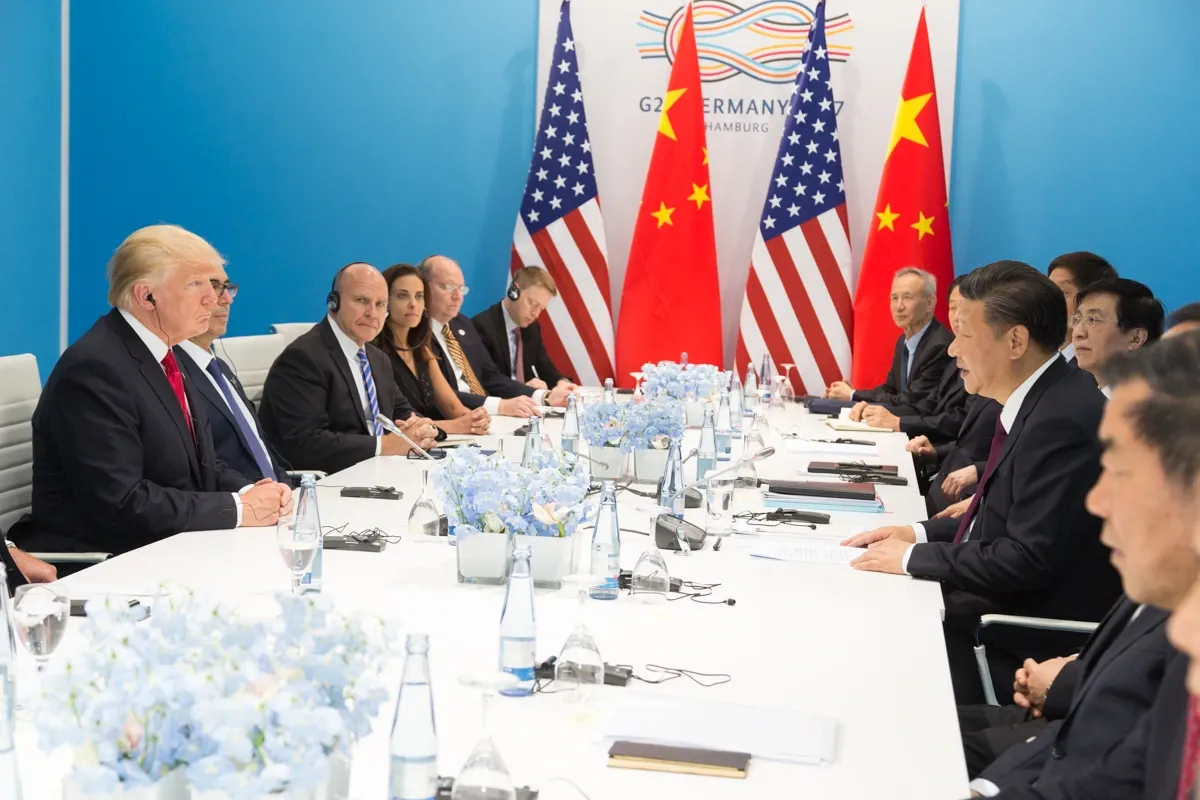
The recent bilateral meetings culminated in high profile encounters between senior leaders that signalled mutual interest in avoiding unchecked economic disruption. These encounters produced a roadmap focused on narrow, achievable steps while explicitly preserving room for strategic rivalry. Washington’s approach reflects a desire to stabilise markets and to limit unintended spill overs into allied economies. Beijing’s posture emphasises the need for respect of national industrial policy and for assurances against coercive technology transfer. The result is a pragmatic corridor of co operation bounded by firm strategic red lines.
Business relief and market response
Markets reacted quickly to the de escalation. Global equity indices rallied on the prospect of reduced trade policy uncertainty, manufacturers revised down some contingency sourcing plans and shipping forwards became less volatile as traders scaled back hedges. Corporate treasurers, who had prepared for potential duty spikes that would have materially increased working capital requirements, were able to postpone drastic reallocations and to negotiate more favourable terms with suppliers. The near term macro effect is modest but material for firms with complex just in time supply chains and for consumers sensitive to price swings on electronics and household goods.
Retailers and multinational manufacturers welcomed the breathing room but emphasised that the current accord provides only a temporary reprieve. Many firms continue contingency planning to diversify suppliers and to regionalise production where economically viable. The business calculus reflects a new normal in which firms cannot assume permanence in any single policy arrangement. Investment decisions, particularly in semiconductor fabrication and critical component supply, increasingly incorporate geopolitical risk premiums that raise the breakeven thresholds for greenfield projects.
Financial markets also recalibrated. Currency volatility eased modestly and commodity prices that had been bid by trade disruption fears retreated slightly. Investors interpreted the agreements as lowering tail risk rather than resolving structural competition. That nuance was reflected in the price action: cyclical assets and exporters with heavy China exposure saw immediate gains, while sectors sensitive to long term strategic technology competition, such as advanced semiconductors and certain AI related suppliers, remained more volatile as the implications of export controls persisted.
Geopolitical undercurrents and strategic competition
The trade truce sits inside a wider geopolitical contest that spans technology, defence and influence in third markets. While commerce resumed in some corridors, both capitals continued to fortify policies aimed at shaping future industrial leadership. Washington pursued measures to protect key technologies from rapid transfer and to incentivise domestic chip production, while Beijing doubled down on state support for strategic sectors and sought to reduce external dependencies through domestic innovation campaigns.
Observers warn that these parallel tracks — commercial stabilisation on the one hand and strategic competition on the other — make the truce inherently brittle. Any significant escalation in crises elsewhere, in the South China Sea or over Taiwan, could quickly supercharge nationalist pressures and destabilise the fragile economic accommodation. In the absence of durable agreements on technology governance and reciprocity in market access, the underlying rivalry is liable to re appear in trade policy, investment screening and export control regimes.
The international community is watching carefully. Allies and regional partners have welcomed lowered tariff tensions because a full blown trade escalation would have reverberated through global supply chains and inflation dynamics. At the same time they are recalibrating their own industrial strategies to avoid becoming collateral in an intensified U S China strategic competition. The net effect is a multipolar economic environment in which close economic ties co exist with increasing strategic decoupling in select high tech domains.
What comes next and the risks to stability
The short term horizon hinges on deliverables that technical teams can implement and on political signalling that reduces incentives for abrupt policy reversals. Key items to watch include compliance with agreed purchasing commitments, transparency in customs and tariff administration and any incremental steps on export control dialogues. Confidence building will require concrete, verifiable actions that go beyond press statements, and both sides understand that mis steps can rapidly erode trust.
Risks remain. Domestic political dynamics in both capitals could sour the arrangement. Shifts in electoral calculus or sudden economic shocks may harden positions and prompt a return to punitive measures. Similarly, strategic incidents such as cyber intrusions or military confrontations could undermine the fragile economic accord. Commercial actors therefore plan under the assumption that any détente will be episodic and conditional rather than a permanent recalibration of relations.
Policy makers and corporates alike are now balancing two imperatives: take advantage of the current easing to reduce near term costs and to normalise trade operations while simultaneously accelerating diversification and resilience strategies that respond to the longer term reality of strategic competition. For many firms that means moving from crisis management to structural adjustments that hedge against future policy discontinuities.
The recent thaw in tariffs and trade tensions between the United States and China offers welcome relief for global commerce and reduces near term volatility for businesses and markets. Yet the arrangement is an uneasy peace rather than a reconciliation. Export controls remain intact in crucial areas, underlying strategic competition continues to shape industrial policy and both capitals retain tools to re escalate if domestic or international pressures demand it. The coming months will test whether measured, verifiable steps can build sufficient trust to extend the truce or whether the arrangement will remain a temporary detour in a broader trajectory of rivalry.
Written by Nick Ravenshade for NENC Media Group, original article and analysis.
Sources: CNBC, Reuters, Financial Times, South China Morning Post, Bloomberg.
Author

Nick Ravenshade, LL.B., covers geopolitics, financial markets, and international security through primary documents, official filings, and open-source intelligence. Founder and Editor-in-Chief of NENC Media Group and WarCommons.
Sign up for NENC Now newsletters.
Stay up to date with curated collection of our top stories.