U.S. President Issues Stark Warnings to Colombia and Repeats Interest in Greenland as Maduro Faces New York Judge
The U.S. President publicly warned Colombia's leader of potential consequences and reiterated a long‑standing strategic interest in Greenland while Venezuela's detained former president prepared to appear before a federal judge in New York; these developments sharpen U.S. policy risks in Latin America and raise questions about regional stability and international law.
WASHINGTON — President Donald Trump on Sunday issued pointed warnings toward Colombia's president and restated a controversial interest in Greenland as Nicolás Maduro prepared to appear before a federal judge in New York, a sequence of events that has intensified diplomatic tensions across the Americas and prompted urgent strategic calculations in capitals from Bogotá to Copenhagen.
Regional escalation and the language of threat
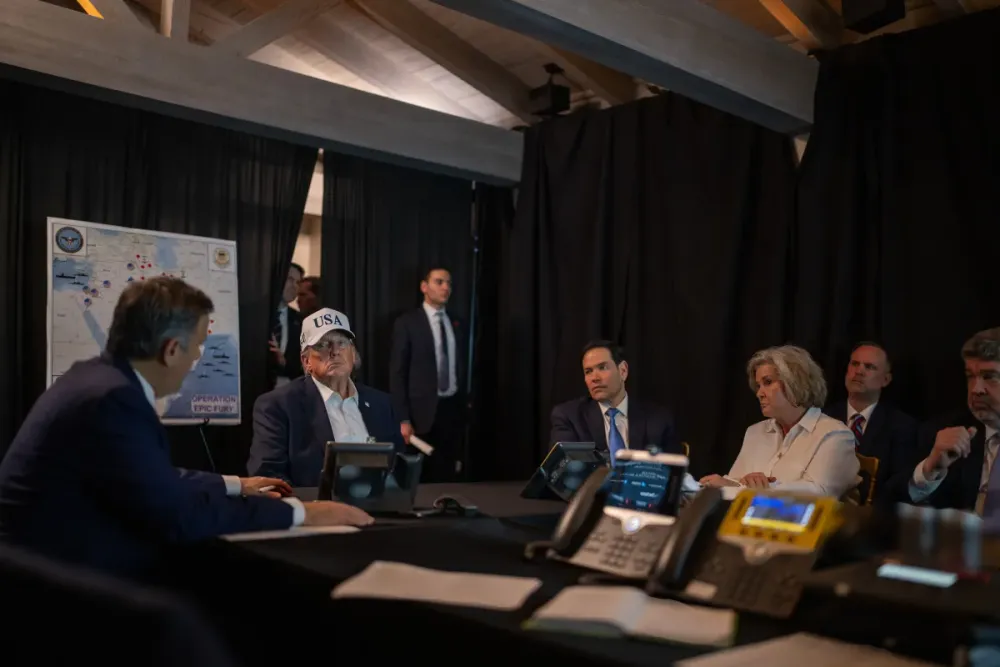
President Trump's remarks, delivered to reporters aboard Air Force One during his return to Washington, framed Colombia as a potential target of U.S. pressure tied to narcotics flows and regional security concerns. The tone of the comments was markedly confrontational, invoking the possibility of punitive measures if Colombia did not alter policies the administration described as permissive toward drug trafficking networks. Those remarks followed a high‑profile U.S. operation that resulted in the detention of Venezuela's president and his transfer to U.S. custody, a development that has already reshaped diplomatic alignments in the hemisphere.
The public warning to Colombia's leader carries both rhetorical and operational implications. Rhetorically, it signals a willingness to escalate bilateral relations with a close U.S. partner over transnational crime and political alignment. Operationally, it raises questions about the range of tools the administration might deploy, from sanctions and interdiction operations to more coercive measures. For Colombia, a country that has cooperated with U.S. counternarcotics efforts for decades, the prospect of direct U.S. pressure complicates domestic politics and could strain security cooperation at a time when both countries face persistent organized‑crime challenges.
Greenland remark and strategic signaling
In the same remarks, the President reiterated a long‑standing interest in Greenland, framing the territory as strategically important to U.S. national security. The comment revived a debate about Arctic geopolitics and U.S. posture in the North Atlantic, where climate change, resource access, and great‑power competition have elevated the strategic value of Arctic territories. The President's phrasing suggested that Greenland's status remains a live consideration for U.S. policymakers, even as the territory is an autonomous part of the Kingdom of Denmark.
The Greenland reference has diplomatic consequences beyond symbolism. It signals to allies and rivals alike that the United States is actively reassessing territorial and basing options in the Arctic. For Denmark and Greenlandic authorities, the remark is likely to prompt renewed scrutiny of defense arrangements, investment offers, and public diplomacy aimed at reassuring local populations about sovereignty and economic benefits. For other Arctic actors, the comment underscores the potential for increased U.S. engagement in a region where military, economic, and environmental interests intersect.
Maduro's New York court appearance and legal stakes
Nicolás Maduro's scheduled appearance before a federal judge in New York marks a pivotal legal moment with broad geopolitical reverberations. The U.S. Department of Justice has filed a superseding indictment alleging involvement in a long‑running narcotics conspiracy and related offenses; the charges, if proven in court, would form the basis for criminal prosecution under U.S. law. Maduro's transfer to U.S. custody and the initiation of formal proceedings in a U.S. federal court place the case squarely within the American judicial system and raise complex questions about extradition, diplomatic immunity, and the treatment of a former head of state.
The legal process will test U.S. prosecutorial strategy and the capacity of courts to manage a politically charged, high‑profile defendant. Defense counsel and prosecutors will confront evidentiary challenges, classified‑information issues, and potential claims of political motivation. The outcome of pretrial motions and the judge's rulings on jurisdictional and evidentiary matters will shape the trajectory of the case and influence diplomatic calculations across the region. For governments in Latin America, the proceedings will be watched closely for precedent and for signals about U.S. willingness to pursue criminal accountability for foreign leaders.
Diplomatic fallout and alliance management
The convergence of a U.S. military operation in Venezuela, public threats toward Colombia, and renewed interest in Greenland has produced immediate diplomatic fallout. Regional governments have responded with a mix of condemnation, caution, and recalibration of ties. Some capitals have publicly criticized the U.S. operation as a breach of sovereignty and international norms, while others have signaled conditional support for efforts to disrupt transnational criminal networks. The mix of reactions reflects divergent threat perceptions and domestic political constraints across the hemisphere.
Managing alliances will require careful diplomacy from Washington. The administration faces the task of reassuring partners that its actions are targeted and lawful while maintaining pressure on networks that traffic drugs and weapons. For NATO and European partners, the Greenland comment introduces a separate set of alliance management issues, particularly with Denmark, which must balance domestic autonomy in Greenland with alliance cohesion. The cumulative effect is a more complex diplomatic environment in which the United States must weigh short‑term operational gains against long‑term alliance trust.
Strategic analysis and downstream risks
Strategically, the sequence of events increases the risk of unintended escalation. Public threats to a neighboring democracy's leader can harden domestic political positions and reduce incentives for cooperation on shared security challenges. The legal prosecution of a former head of state in a foreign court, while grounded in criminal statutes, carries geopolitical symbolism that may provoke retaliatory measures or influence proxy dynamics in the region. Moreover, the Greenland remark signals a willingness to revisit territorial arrangements that have been stable for decades, potentially complicating transatlantic defense planning.
Downstream risks include the erosion of intelligence‑sharing arrangements, the politicization of counternarcotics cooperation, and the potential for increased anti‑U.S. sentiment that could be exploited by adversaries. Conversely, decisive action against transnational criminal networks could yield operational benefits if conducted within legal frameworks and with partner buy‑in. The balance between coercion and cooperation will determine whether these developments produce durable security gains or a protracted period of diplomatic strain.
Legal, political, and policy implications for Washington
For U.S. policymakers, the immediate challenge is to align legal action, military operations, and diplomatic messaging into a coherent strategy that preserves rule‑of‑law norms and alliance relationships. The Justice Department's case will proceed through established judicial channels, and the executive branch must avoid conflating prosecutorial decisions with political objectives. At the same time, the administration must articulate clear policy goals for the region that address drug trafficking, democratic governance, and humanitarian concerns without undermining international legal standards.
Congressional oversight, judicial review, and allied consultations will shape the policy environment in the coming weeks. Lawmakers may press for briefings and legal justifications for operations that cross borders, while courts will adjudicate the merits of criminal charges. Allies and regional organizations will seek assurances that actions taken in the name of security adhere to international law and respect sovereign prerogatives. How Washington navigates these institutional checks will influence both the immediate outcomes and the longer‑term credibility of U.S. leadership in the hemisphere.
Written by Nick Ravenshade for NENC Media Group, original article and analysis.
Sources: Politico, Bloomberg, United States District Court Southern District of New York, NBC New York, The Independent.
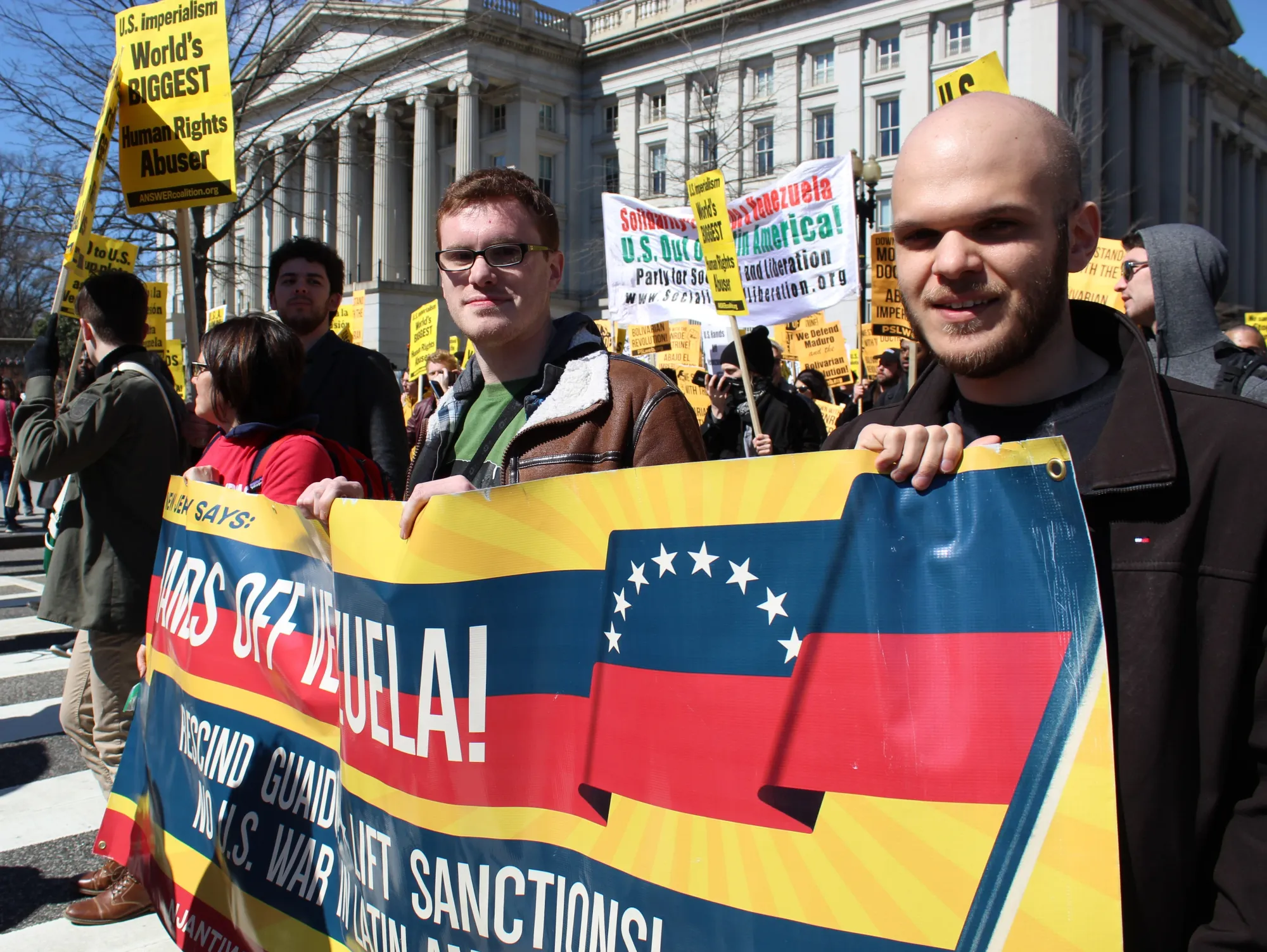
Photo: ANSWER Coalition U.S. HANDS OFF VENEZUELA March to Trump International Hotel” by Elvert Barnes / Source: https://www.flickr.com/photos/perspective/46700318004 / License: CC BY‑SA 2.0 (https://creativecommons.org/licenses/by-sa/2.0/)
Author

Nick Ravenshade, LL.B., covers geopolitics, financial markets, and international security through primary documents, official filings, and open-source intelligence. Founder and Editor-in-Chief of NENC Media Group and WarCommons.
Sign up for NENC Now newsletters.
Stay up to date with curated collection of our top stories.