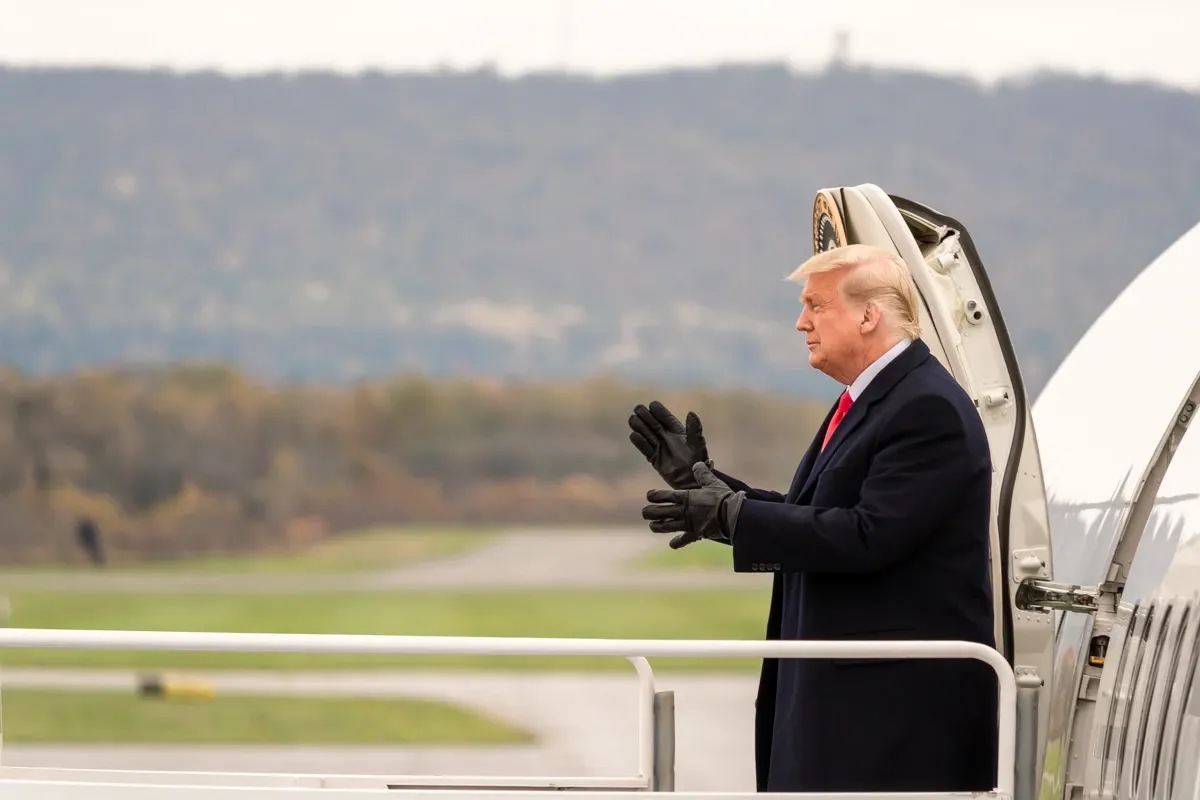
WASHINGTON — President Donald Trump said the United States is examining a range of responses to the mass protests and deadly crackdown in Iran, telling reporters aboard Air Force One that "the military is looking at it, and we're looking at some very strong options," and that senior advisers would brief him this week. The comments, which also included an offer to speak with a private satellite provider about restoring internet access in Iran, heightened regional tensions and prompted urgent consultations among senior national-security officials. The administration’s posture signals a willingness to consider coercive measures while also testing nonkinetic levers; it has already produced sharp warnings from Tehran and careful hedging by Washington’s regional partners.
What the president said and what it means
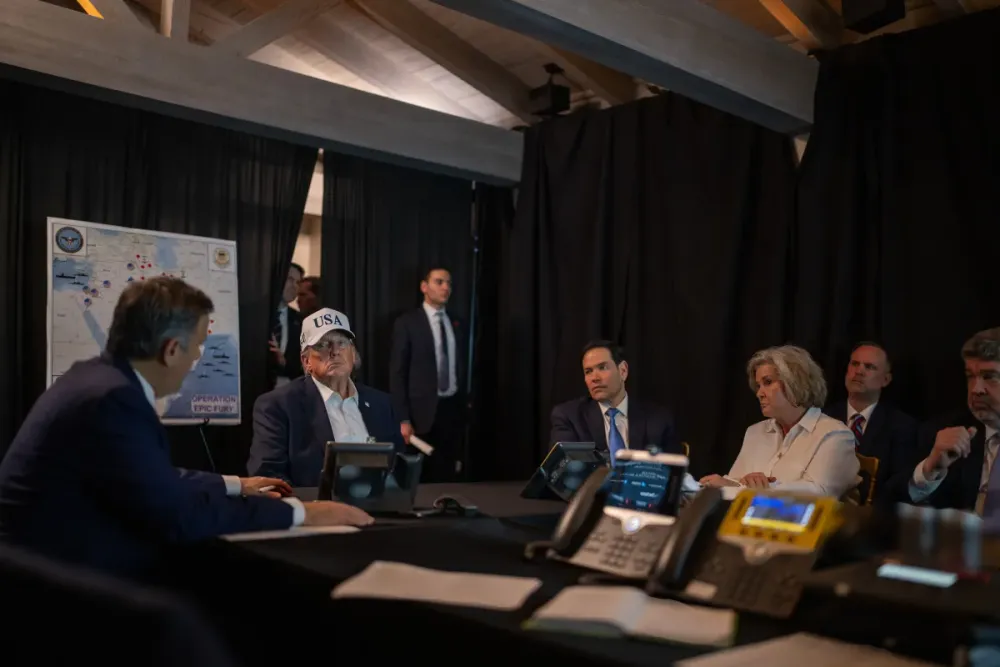
On Sunday night the president described a menu of options under deliberation and indicated a near-term advisory meeting to review military, cyber and other measures. He framed the choices as responses to a reported surge in civilian casualties and to a communications blackout inside Iran, and he asserted that the United States stood ready to help protesters if the Iranian government escalated violence. He also said he planned to contact a private satellite operator to explore restoring internet connectivity, a move that would be technically and legally complex but that his office presented as an immediate humanitarian and informational step.
The rhetorical posture is consequential because public declarations shape deterrence and diplomacy simultaneously. Explicitly signalling possible military or cyber action raises the costs for Tehran while narrowing Washington’s diplomatic options, because threats can become self-limiting if they constrain later flexibility. The administration’s framing also places a premium on rapid verification of events inside Iran; policymakers will need reliable, corroborated evidence to justify any escalation and to manage allied expectations.
Military, cyber and nonkinetic options on the table
Officials say the menu includes calibrated military strikes against limited targets, novel cyber operations that could degrade command-and-control or communications used to prosecute repression, expanded sanctions against Iranian entities, and stepped-up support for dissident media and dissident networks. Each tool carries different risk profiles. Military strikes require precise targeting, clear legal justification and assessments of secondary effects; cyber operations can be deniable but may spill into civilian infrastructure; sanctions have economic bluntness and long lead times; information support can aid mobilisation but also be used by Tehran to portray external meddling.
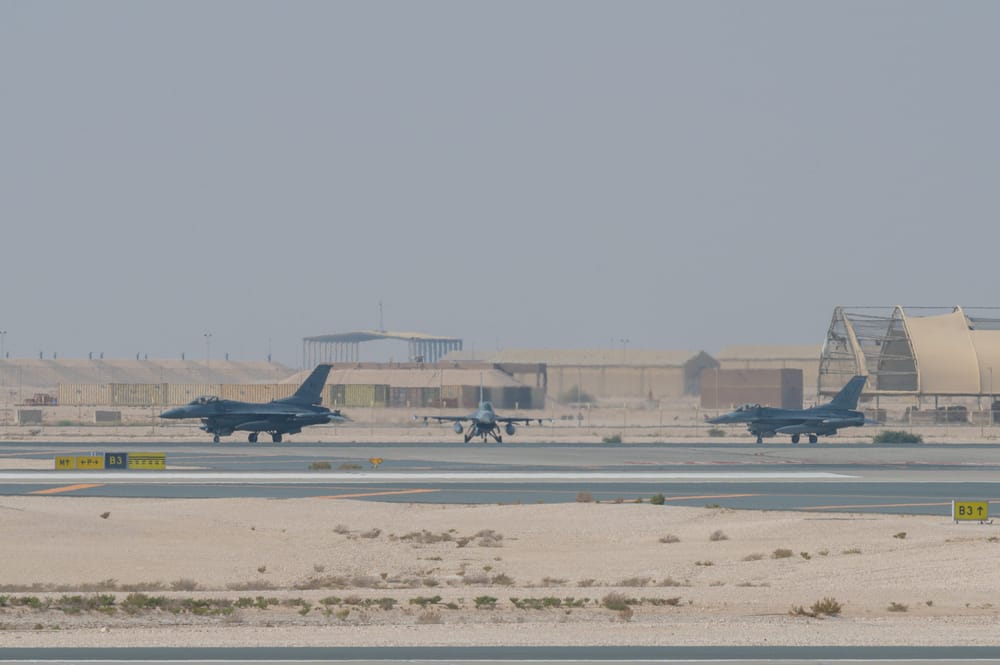
Operational planners and legal advisers will weigh proportionality, attribution certainty and escalation dynamics. The decision calculus is complicated further by the regional balance of forces: nearby bases, naval deployments and allied capabilities shape the realistic scope of any action. Diplomats argue that the most politically sustainable measures are those that build international consensus and that are paired with clear humanitarian objectives, because unilateral kinetic steps risk alienating partners and generating retaliatory commitments.
Evidence, verification and the casualty debate
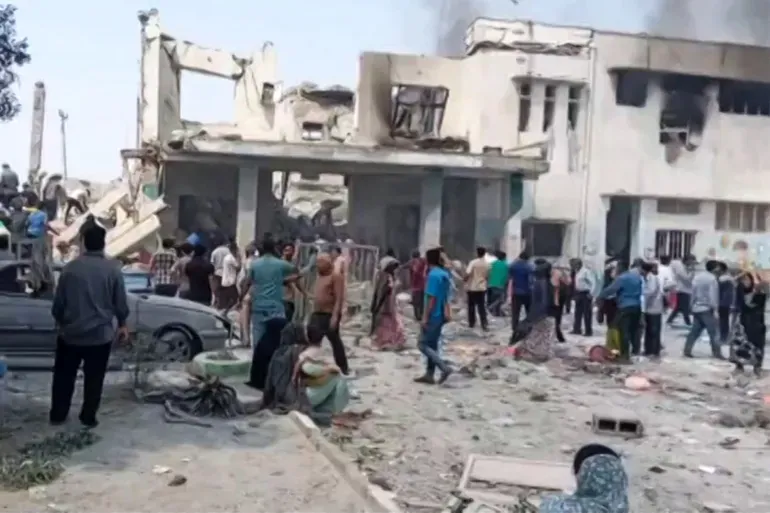
The administration has pointed to rights-group tallies and eyewitness footage as part of its justification for urgent action, citing large numbers of fatalities and mass detentions that rights monitors attribute to security-force responses. Precise casualty counts remain contested because an extensive communications blackout has hampered independent verification and the government has not published complete figures. Rights organisations and activist networks report hundreds of deaths and thousands of arrests as of January 11, 2026; those figures are widely cited in press briefings and have shaped the political case for intervention.
Because the accuracy and provenance of incident-level evidence matter for legal and political decisions, analysts say U.S. policymakers are seeking corroboration from multiple, independent sources before moving beyond rhetoric. Satellite imagery, hospital logs, intercepted communications and authenticated video can all play roles in a rigorous evidentiary chain, but access limitations and the danger of manipulated content require painstaking cross-checking. The need for verified, timestamped, attributed evidence is a central constraint on the timeframe and scale of any U.S. response.
Regional reactions and alliance management
Regional governments reacted with caution. Some U.S. partners signalled sympathy for protesters and concern about mass casualties, while urging restraint to avoid an escalation that could destabilise neighbouring states. Others explicitly warned that U.S. military options could provoke retaliation and broaden the conflict. Israel and certain Gulf partners publicly expressed support for measures that defend civilians, but also emphasised the importance of coordinated planning to prevent miscalculation.
Washington faces a political and diplomatic balancing act. Public threats can reassure domestic audiences but complicate the task of building multilateral action. Senior U.S. officials are therefore pursuing both private consultations with allies and rapid national-security briefings to explain the evidence and to solicit options that can be synchronised across partners. The administration’s outreach aims to combine moral pressure with operational planning, yet success depends on bridging skeptical capitals that worry about open-ended escalation.
Communications interventions: Starlink and legal hurdles
One of the most immediate technical proposals the president mentioned is seeking private-sector assistance to restore internet access to Iranians, including the possibility of using satellite-based services. Deploying such systems at scale requires hardware distribution, spectrum considerations, regulatory waivers and careful routing to avoid facilitating violent actors. Private companies have in the past provided satellite links during internet blackouts, but the legal and logistical complexities of bypassing a sovereign government's shutdown are substantial and politically fraught.
Beyond technical challenges, there are strategic trade-offs: restoring connectivity could enable civil-society organising and independent reporting, but it could also complicate attribution of protests' leadership and create avenues for foreign influence. Legal advisers will need to untangle export-control, sanctions and privacy questions before any transfer of material or activation of services. The political optics of relying on private actors for what amounts to a geopolitical intervention are also untested at scale.
Risks of escalation and potential triggers
Military or significant cyber moves carry clear escalation risks. Tehran has signalled it would retaliate against what it deems foreign aggression, potentially targeting regional bases or proxy networks. Planners must model a range of contingencies, from limited blowback against specific installations to asymmetric attacks on maritime traffic, and assess the costs of various defensive postures. The more kinetic the U.S. option, the greater the chance of regional alignment around countermeasures that could entrench instability.
Conversely, inaction or only symbolic measures risk domestic criticism that the administration failed to defend human rights or deter mass atrocities. That political calculus is acute because strong rhetorical commitments raise expectations that leaders then feel compelled to fulfil. The immediate challenge for U.S. decision-makers is to match means with ends: to choose actions that plausibly protect civilians and deter repression without precipitating a wider conflict.
Political and legal constraints at home
Domestic legal advisers and Congressional leaders are likely to scrutinise any proposed military or cyber steps. Lawmakers on both sides of the aisle have signalled interest in being briefed and in asserting oversight over use-of-force decisions that could entangle U.S. forces. Even measures framed as humanitarian or information-based can attract scrutiny if they involve material support to activist groups or actions that Congress deems to risk escalation. The administration will therefore weigh not only operational feasibility but also the likelihood of securing sustained political backing at home.
For now, the president has ordered a rapid advisory process and indicated decisions may follow after the briefings. The coming days will test whether Washington can assemble legally defensible, multilaterally supported options that achieve pressure on Tehran while containing the risk of wider confrontation. How that balance is struck will shape not only the course of the protests but also the broader pattern of U.S.-Iran relations for months to come.
Written by Nick Ravenshade for NENC Media Group, original article and analysis.
Sources: Reuters, Associated Press, Financial Times, Al Jazeera, Axios, The Guardian.
Author

Nick Ravenshade, LL.B., covers geopolitics, financial markets, and international security through primary documents, official filings, and open-source intelligence. Founder and Editor-in-Chief of NENC Media Group and WarCommons.
Sign up for NENC Now newsletters.
Stay up to date with curated collection of our top stories.